
Core PCE drops — Truflation Praised
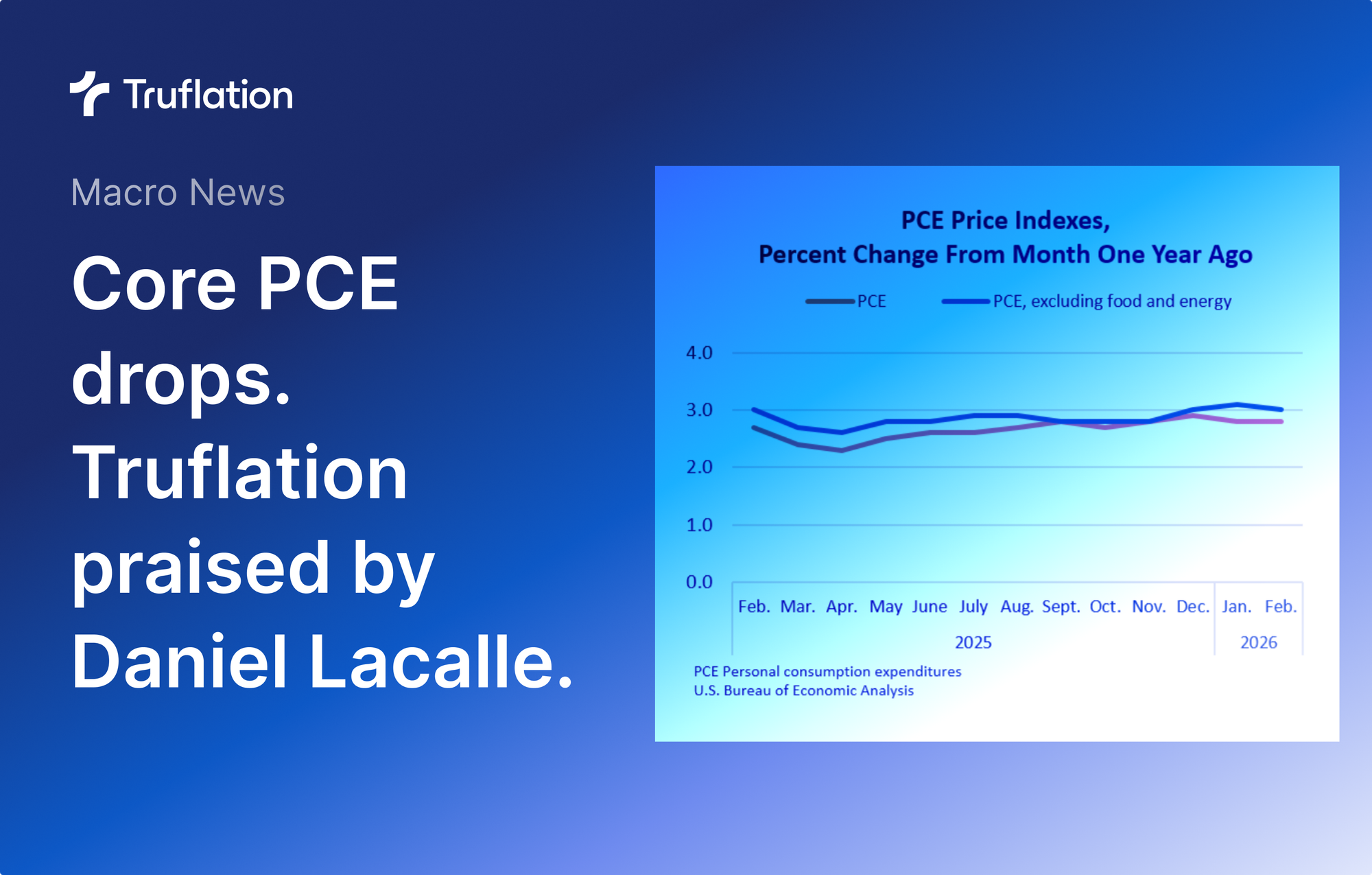
The U.S. Bureau of Economic Analysis (BEA) today released the Personal Income and Outlays report for February 2026.
- Headline PCE +2.8% year-over-year (YoY), same as the previous month
- Headline PCE +0.4% month-over-month (MoM), up from 0.3% in January
- Core PCE (excluding food and energy): +3.0% YoY, down from 3.1% previous month
- Core PCE +0.4% month-over-month (MoM), same as in January
All numbers came in line with market expectations.
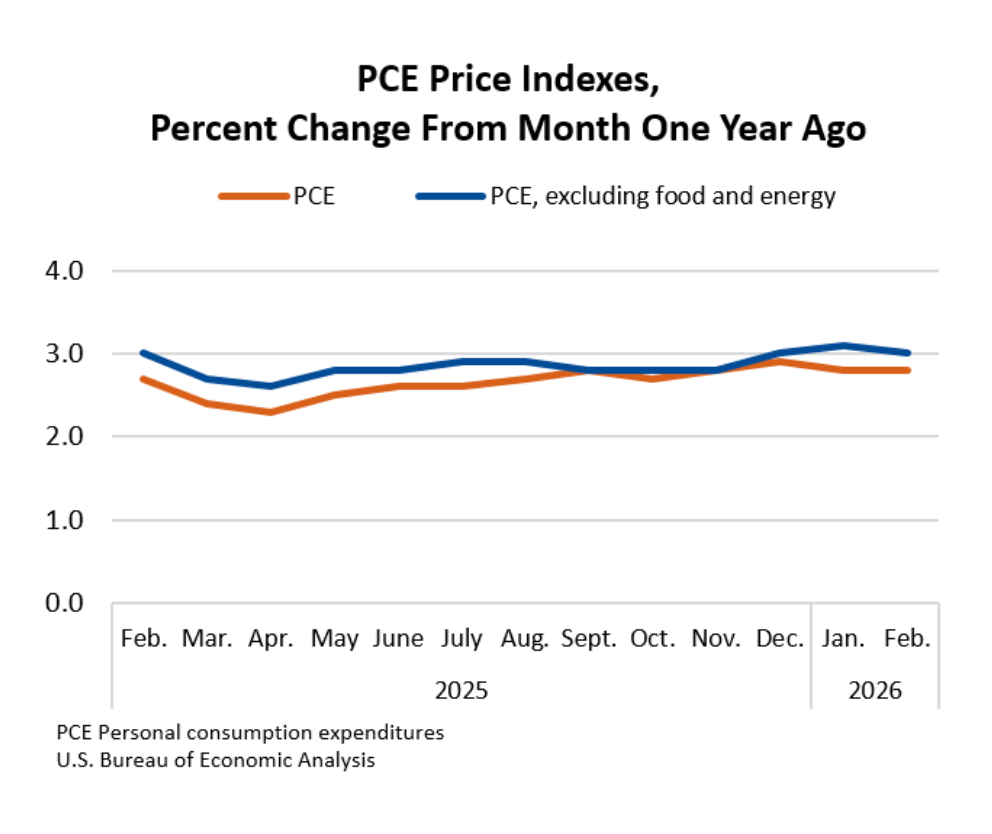
This latest delayed read for February seems to reinforce the slow-to-drop PCE and core PCE inflation that the Fed uses as a rationale for not cutting rates.
Core PCE is also often referred to as the Fed's preferred inflation gauge for sticky long-term consumer inflation.
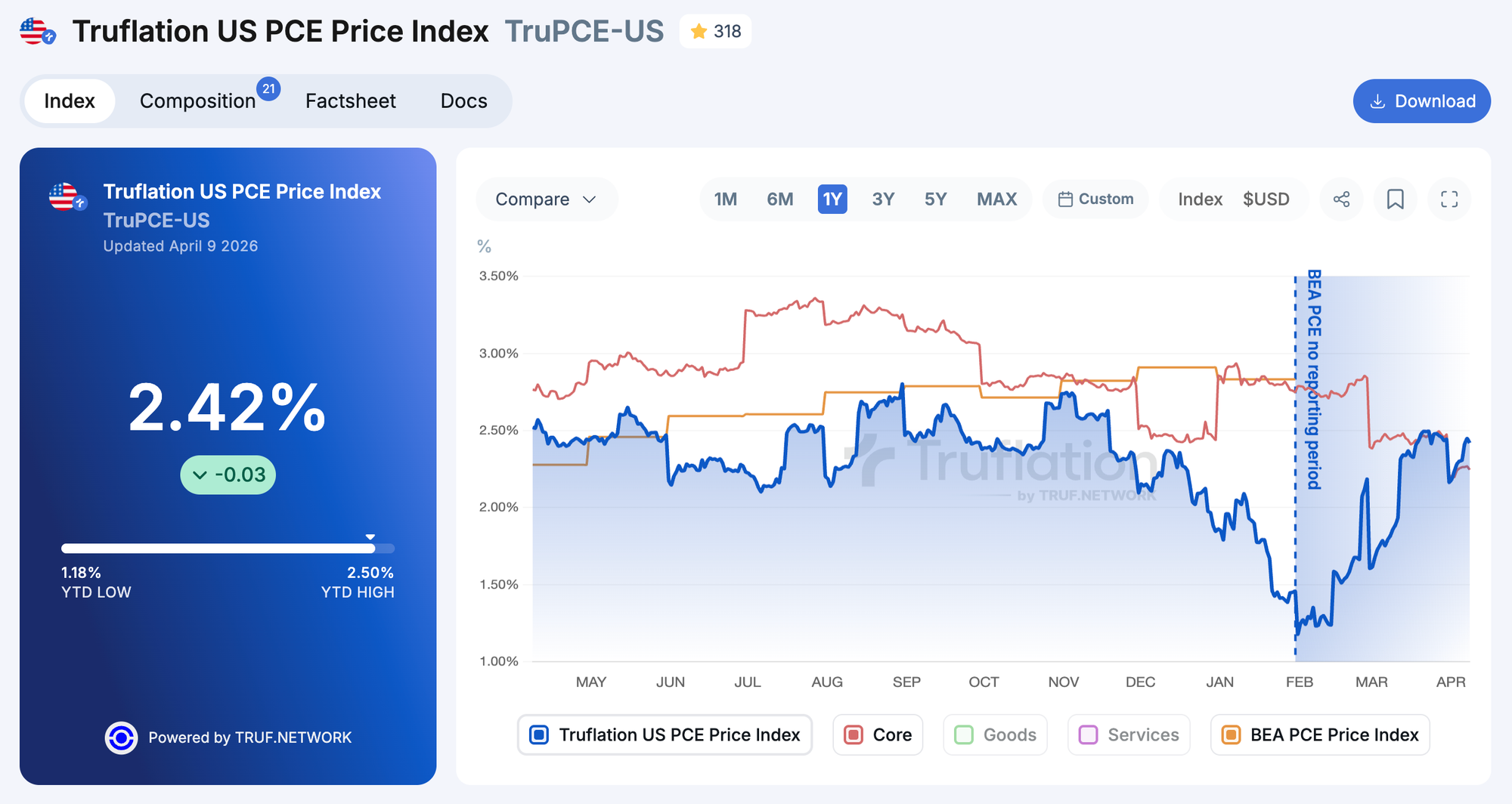
Meanwhile, Truflation's gauge of personal expenditures, created by mapping our transaction data onto the BEA's PCE, shows that the PCE index already dropped to 1.2% in February before bouncing back dramatically, driven by gasoline prices between mid-February and April.
- Truflation PCE is currently 2.42% (as of April 9)
- Truflation core PCE is 2.25% (as of April 9)
Our core PCE didn't register the February drops presumably related to more volatile items like food and energy, and continued a slow but steady decrease towards its current > 5-year low, painting a more optimistic picture than the official PCE.
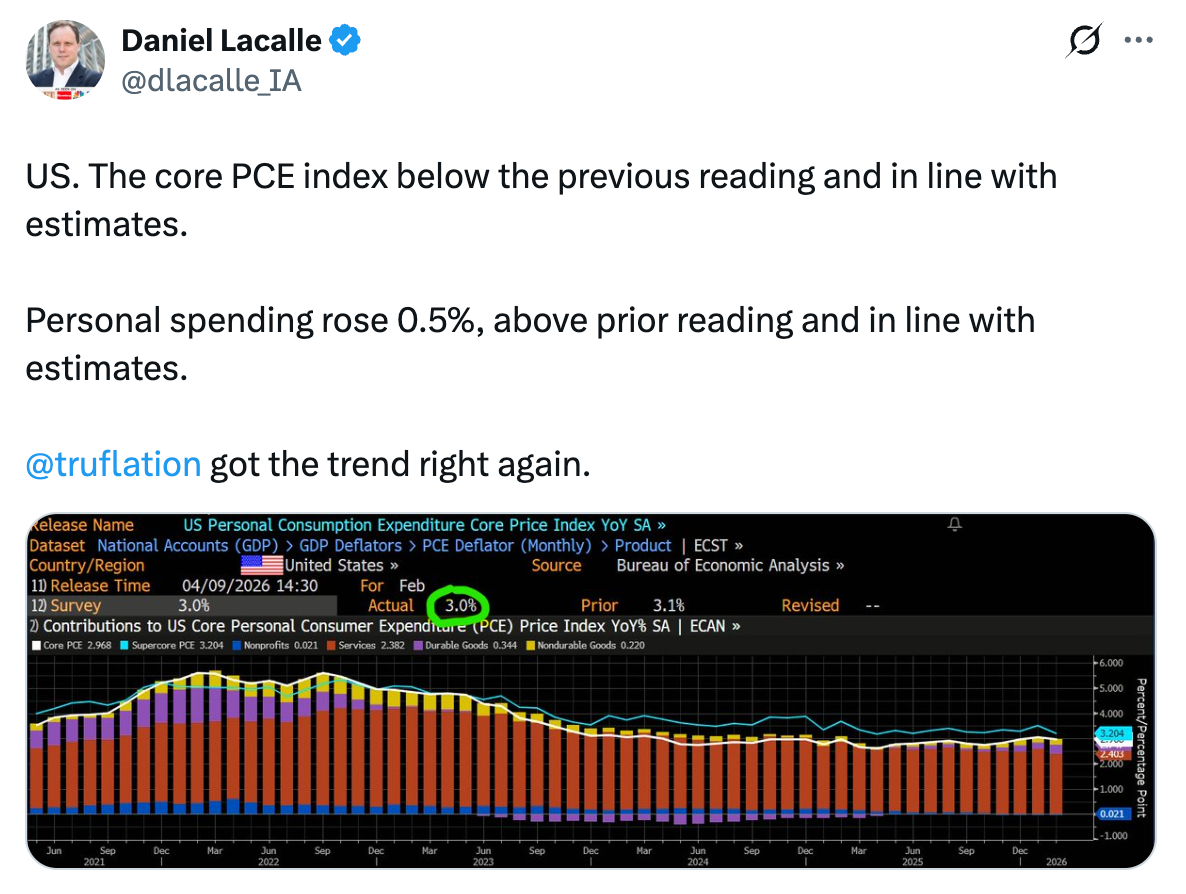
Following the PCE release, Truflation data was praised by a famous economist, Daniel Lacalle, for correctly capturing the inflation trends for February.
Today's BEA PCE release was the delayed February data. The March PCE release is expected at the end of April.