Beige Book: oil everywhere, prices still climbing, consumers splitting by income
The Fed’s October Beige Book reads like a supply-shock report. Here’s how it lines up with Truflation’s daily data.


The Fed’s October Beige Book reads like a supply-shock report. Here’s how it lines up with Truflation’s daily data.
The Fed released its October Beige Book on October 14. It’s based on contacts across all 12 Reserve Bank districts, with information collected through October 5.
Activity is mostly flat to slightly up, and nearly every district is talking about price pressure. Here’s what stood out and how it compares with Truflation’s real-time data.
1. Price growth hasn’t cooled. It’s picking up.
Three districts called price growth “robust” and eight called it “moderate.” Three of those eight said input-price pressures were “intensifying.” Four districts said the pace of price increases has picked up since the last report. Higher oil prices showed up in every district’s report. Firms pointed to diesel and fuel surcharges that are pushing costs down the supply chain, along with tariffs, insurance and other commodities.
The Truflation view: our index splits along the same line.
• Truflation US goods inflation is running at 4.16%, nearly double services at 2.23%.
• Headline Truflation CPI is 2.93%, while core is just 1.65%.
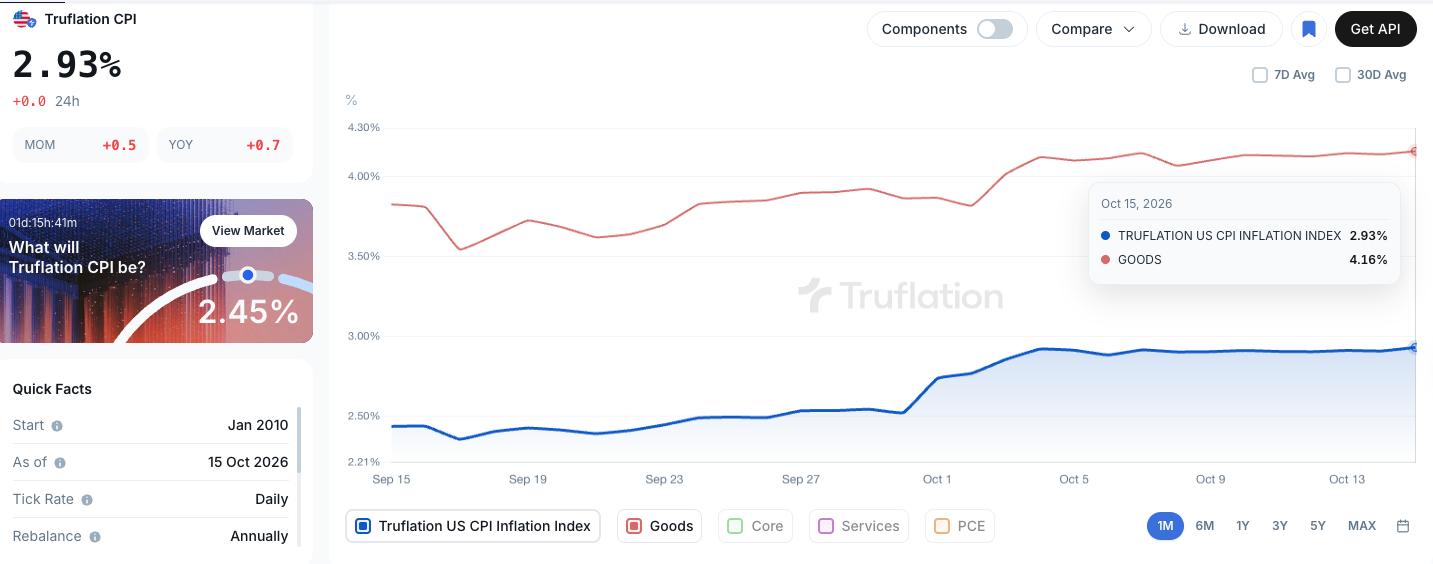
This is a supply-cost story led by energy and goods, not a broad demand surge. That’s what we flagged before the September print: “Inflation is not yet broadening decisively at the consumer level, but the upstream pipeline is becoming more inflationary.”
2. The next leg could come from contracts being repriced.
The detail to watch: firms expect prices to keep rising “as existing contracts expire” and they renegotiate hedges and delivery contracts. Official CPI picks this up with a lag. Truflation tracks prices daily across 100+ sources, so pass-through shows up in our data as it happens rather than weeks later.
3. Consumers are splitting by income.
Most districts reported little or no change in consumer spending. More than half said spending was being driven by high-income households. Even in Dallas, where retail was solid, firms saw “lower-income customers being more cautious with spending.” Consumer-facing firms are squeezing margins with selective price increases, discounts and menu changes, because price-sensitive customers are pushing back.
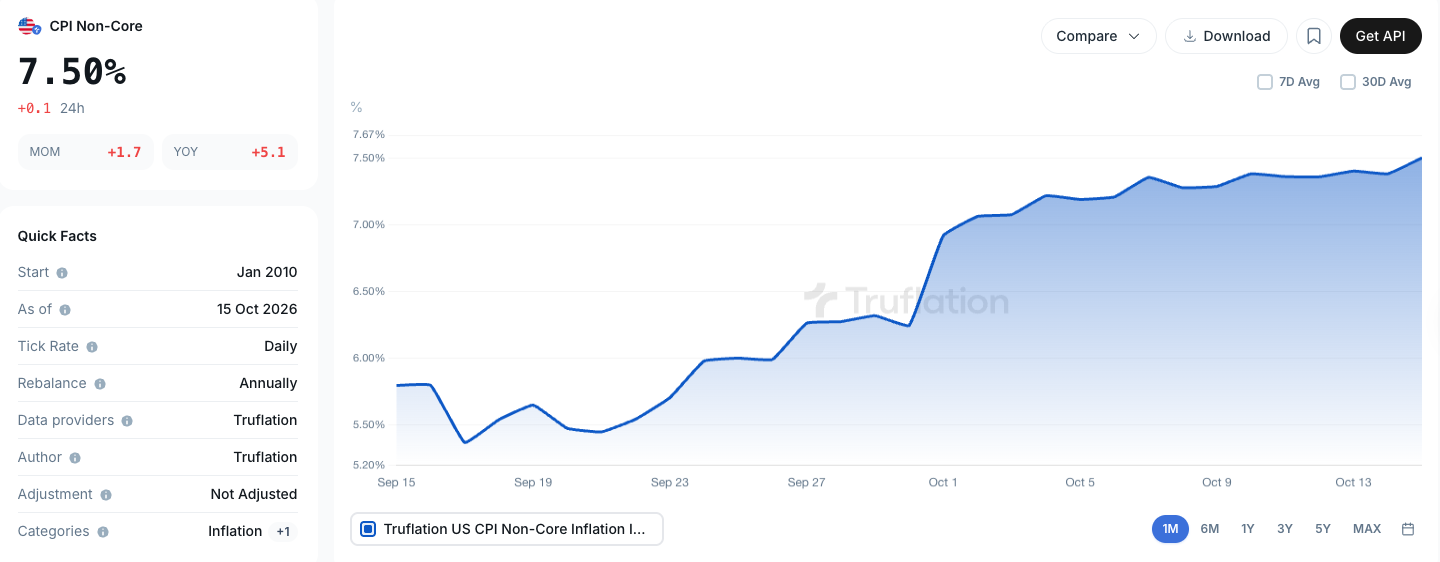
The Truflation view: Truflation’s non-core inflation (food and energy) is 7.50%. That’s the part of the basket lower-income households spend the most on. Core is 1.65%. The gap between those two numbers is the squeeze the Beige Book is describing.
4. Wages: the official and real-time pictures disagree.
Boston staffing firms said workers were looking for new jobs because “wage increases lagged inflation.” Several districts reported cost-of-living demands from workers. On the official numbers that makes sense: September BLS CPI came in at 3.7%.
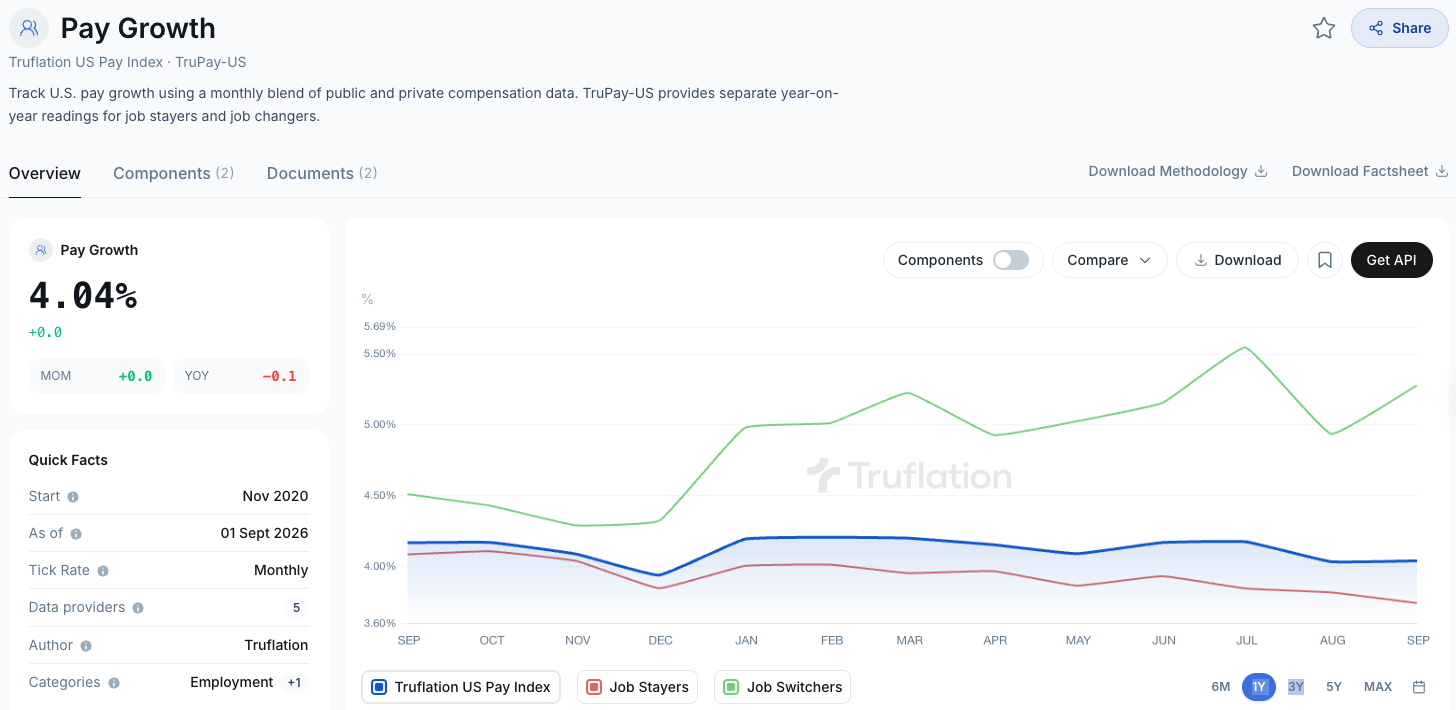
On Truflation’s numbers it looks different. Truflation US wages are up 4.04% against Truflation CPI of 2.91%, which means real wages are still positive. Which measure you trust matters a lot for how you read the labor market and what the Fed does next.
5. AI is starting to show up in hiring.
Five districts said some firms had cut staff through attrition, delayed hiring, or expect to create fewer jobs after productivity gains from AI investment. Employment was flat to slightly up in most districts. Slower hiring plus moderate wage growth caps demand-driven inflation. It doesn’t stop supply-driven inflation.
6. Housing is the one area of relief.
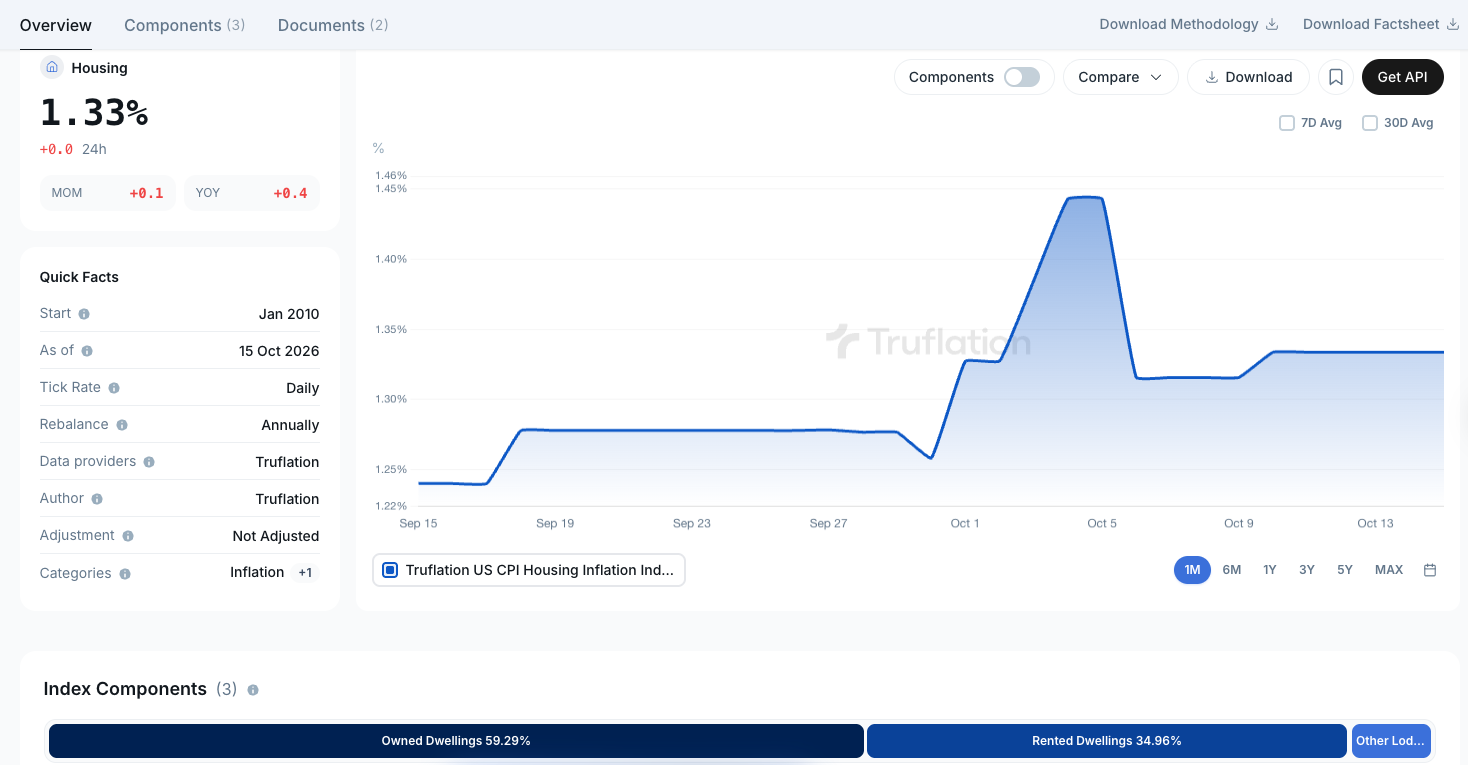
Boston reported new weakness in home sales, and San Francisco said residential real estate softened. Truflation’s housing index is at 1.33%, one of the coolest parts of our basket. BLS shelter data reflects this months later.
The bottom line
The Beige Book is describing the same thing Truflation’s data has shown for months: energy and tariff costs moving through goods, a stretched lower-income consumer, cooling housing, and a labor market that limits demand.
The open question is whether supply costs spread into core. Contract repricing is the channel to watch.
What’s next
• Truflation’s T-1 forecast for October CPI publishes November 9, the day before the BLS release on November 10.
• Track the daily data, ask Truman, or trade the prints at truflation.com.