
Gas Prices Continue to Put Inflationary Pressure on Consumers

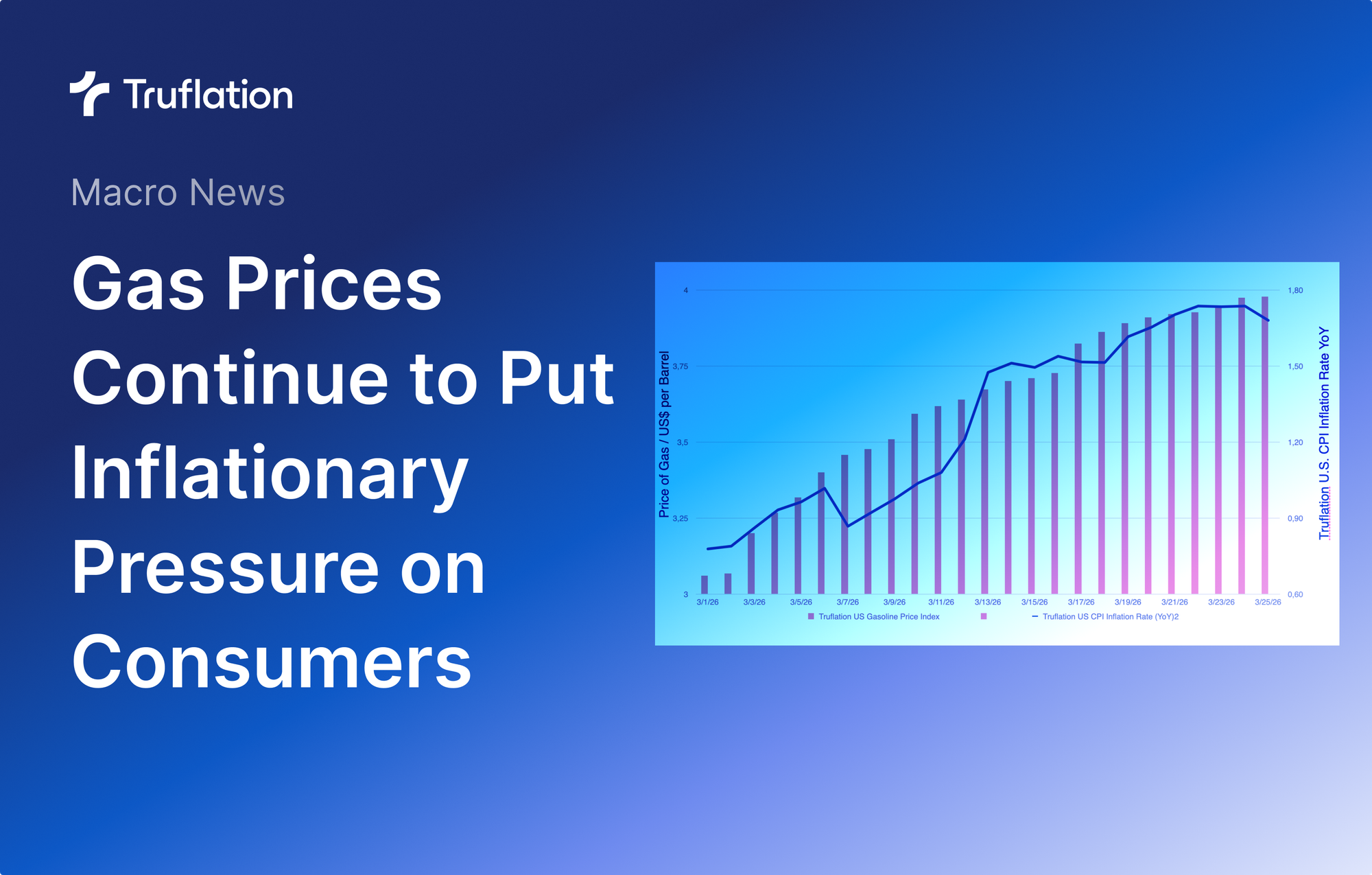
The surge in gas prices continued inflationary pressure on Truflation CPI. It will be interesting to see whether that pressure already shows up in the March BLS CPI due on the 10th of April.
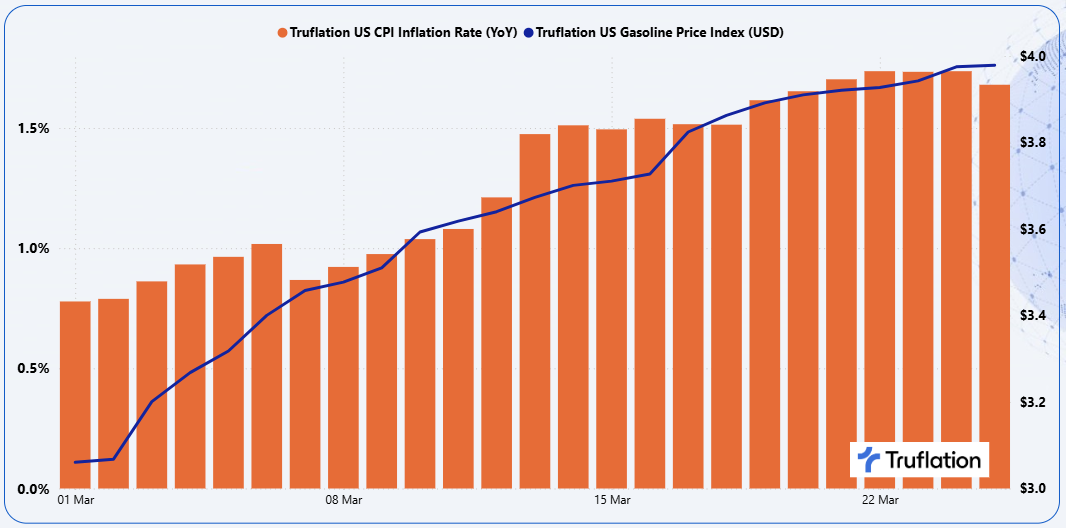
As of today, gas prices have increased 30% over the past month, which is feeding directly into U.S. inflation data. The impact is visible from the beginning of March in real-time Truflation data. Our data team also expects this shift to show in the upcoming BLS CPI March release and to continue influencing inflation readings in the months ahead.
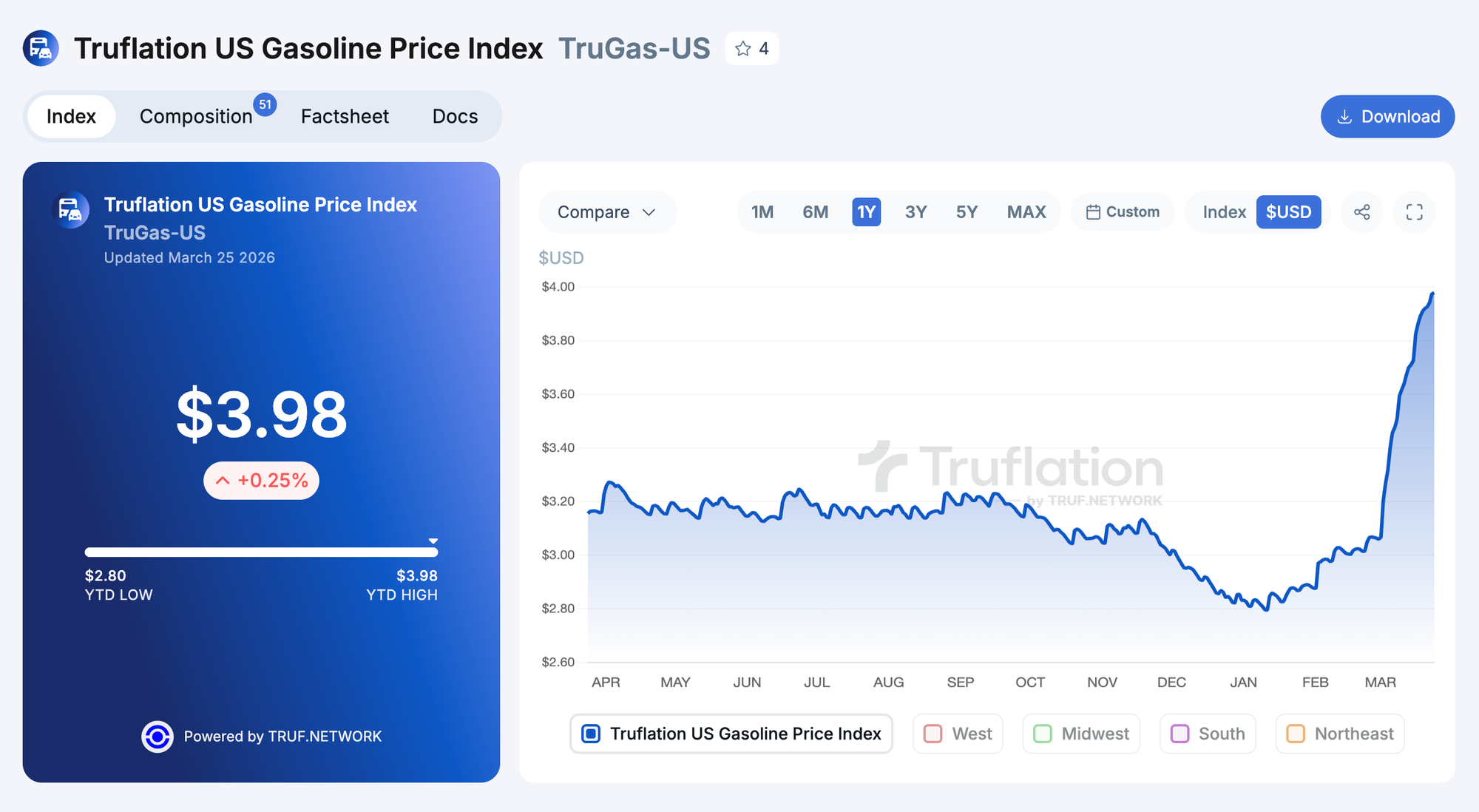
As of March 25, 2026, gasoline prices are up $0.91 compared to a month ago. On a broader monthly basis, average prices in March are running 21% higher than in February, equivalent to an increase of roughly $0.62. This sustained rise, rather than a short-lived spike, suggests a more persistent inflationary impulse.
The implications extend beyond a single data release. Energy costs are a key input across the economy, affecting transportation, production, and consumer prices more broadly. As a result, the recent surge in gas prices is likely to exert upward pressure not only on March inflation figures, but also on April and potentially subsequent CPI prints.
At the center of this price shock is disruption in the Strait of Hormuz. Even in the event of an immediate resolution, supply normalization is unlikely to be swift. Restarting production and rebalancing global distribution networks could take weeks, if not months, prolonging the period of elevated prices.
Looking ahead, the trajectory of gas prices and their inflationary impact will depend on several key factors: the duration of geopolitical tensions affecting the strait, the speed at which production capacity can be restored, and the scale of intervention from strategic reserves.
What is the US Government doing to mitigate oil and gasoline prices?
In response to tightening supply conditions, the U.S. Department of Energy has begun releasing oil from the Strategic Petroleum Reserve (SPR). An initial 45.2 million barrels have been deployed as part of a broader, coordinated 400 million-barrel release among International Energy Agency member countries. The US SPR currently holds approximately 415 million barrels (after the stock has been severely depleted between 2021 and 2023), leaving policymakers with finite capacity to offset prolonged disruptions.
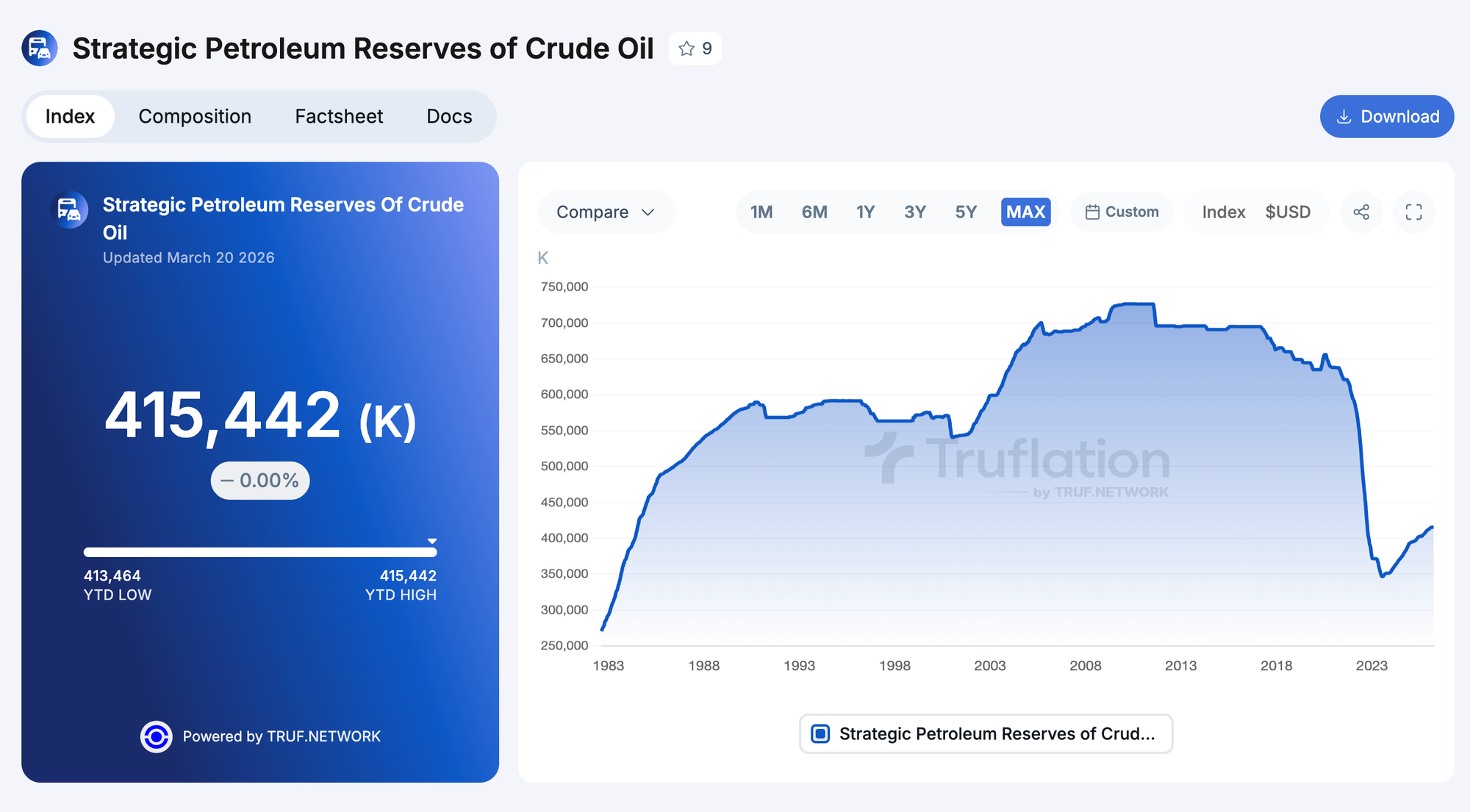
The bottom line is clear: the recent surge in gas prices represents a renewed source of inflationary pressure, with effects likely to persist across multiple reporting periods. As energy markets remain sensitive to geopolitical developments, inflation risks appear tilted to the upside in the near term.
What were the Gasoline effects on the Truflation US CPI?
Truflation CPI has been increasing rapidly in March 2026, after months of strong disinflation and even deflation across a few major categories.
Today (March 26), Truflation's independent US inflation index (TruCPI) jumped up again from 1.68% to 1.77%.
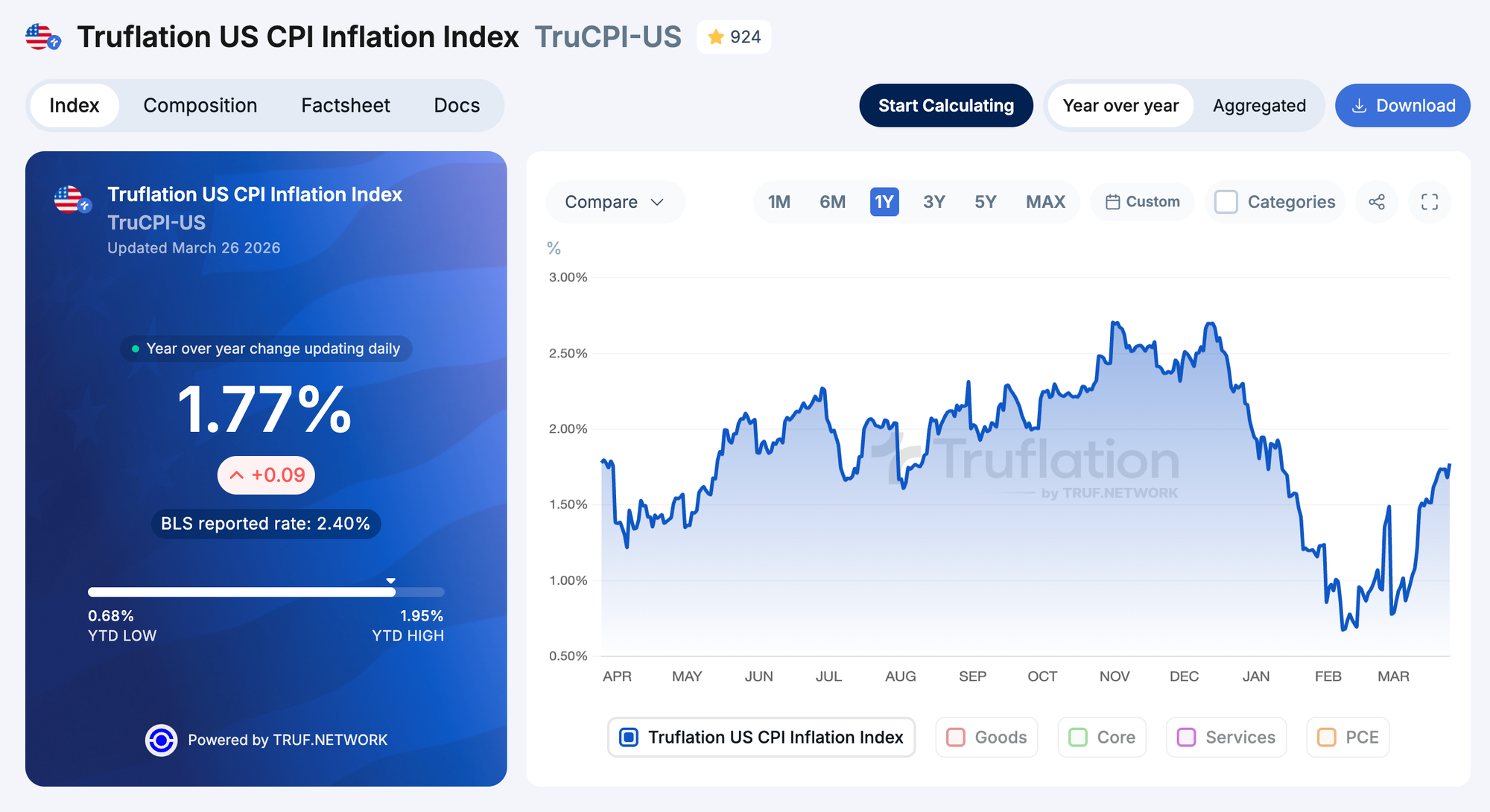
Main drivers were:
- Transport driven by Gasoline (+0.06%)
- Utilities driven by Electricity (+0.02%)
- Food driven by Food at Home (+0.01%)
Gasoline prices have had a particularly big impact on our inflation numbers. They account for only ~3.2% of the Truflation CPI. Since gas prices increased by ~30% over the past month, this jump has been highly noticeable in the headline inflation, and we expect some of it will be visible in the upcoming BLS CPI as well.
Gas prices, with energy and shipment constraints, are also expected to drive other components of inflation in the coming weeks and months.
The gasoline category in our US CPI inflation increased by> 2.3% today, driving overall transport by 0.3% and contributing 0.06% to headline inflation.
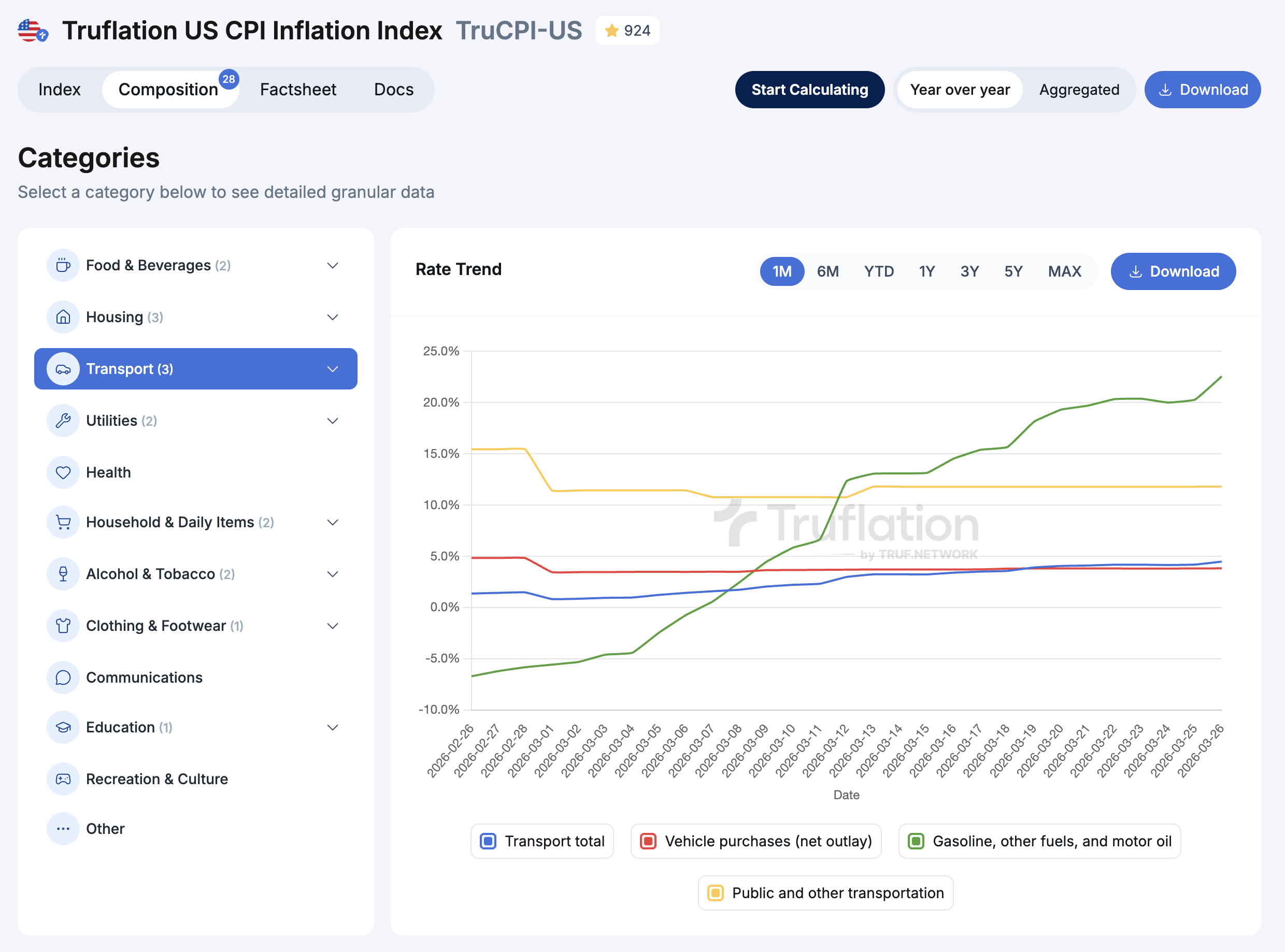
You can track the details of what drives US inflation in the Composition tab of our US CPI index.
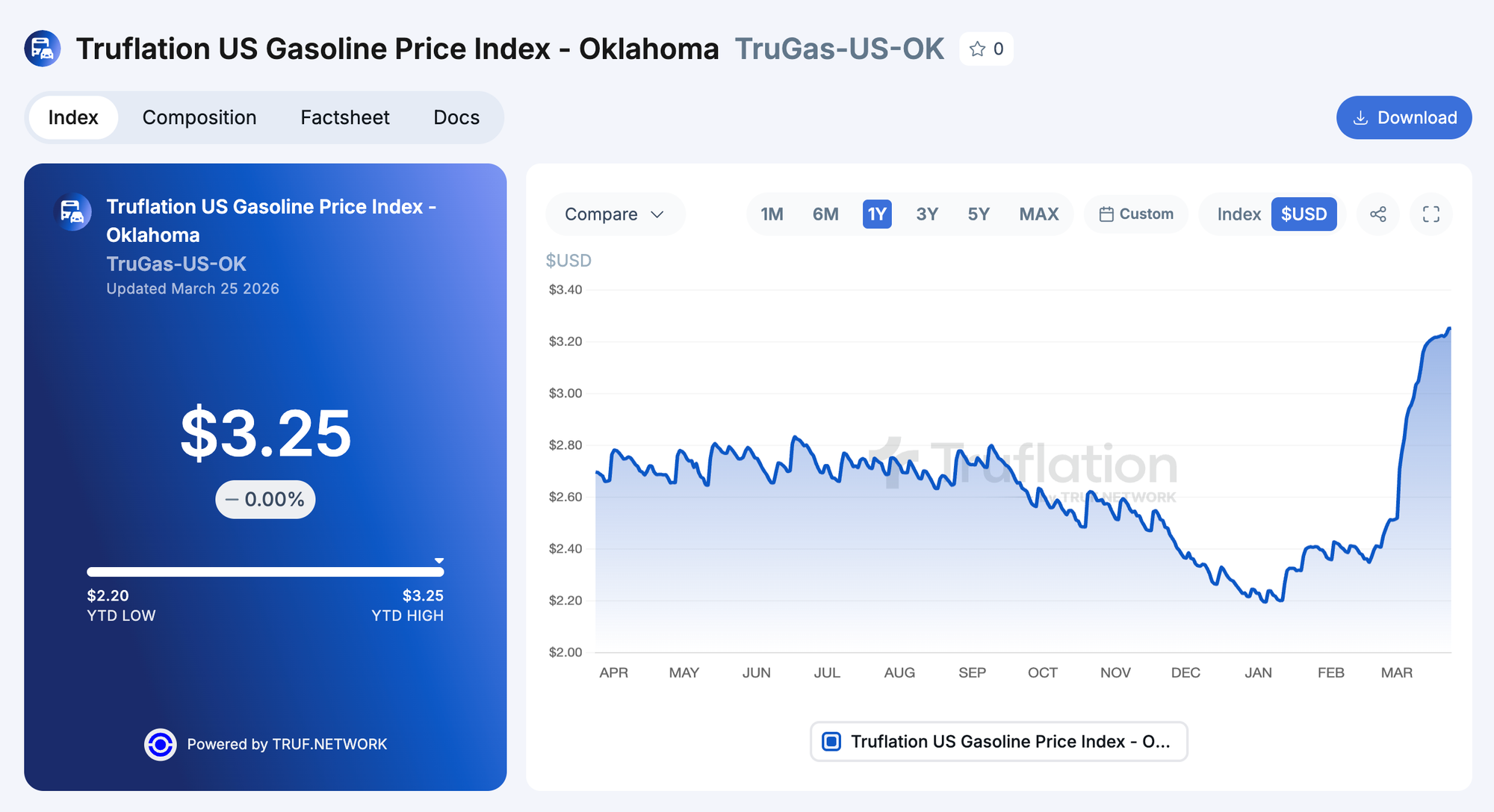
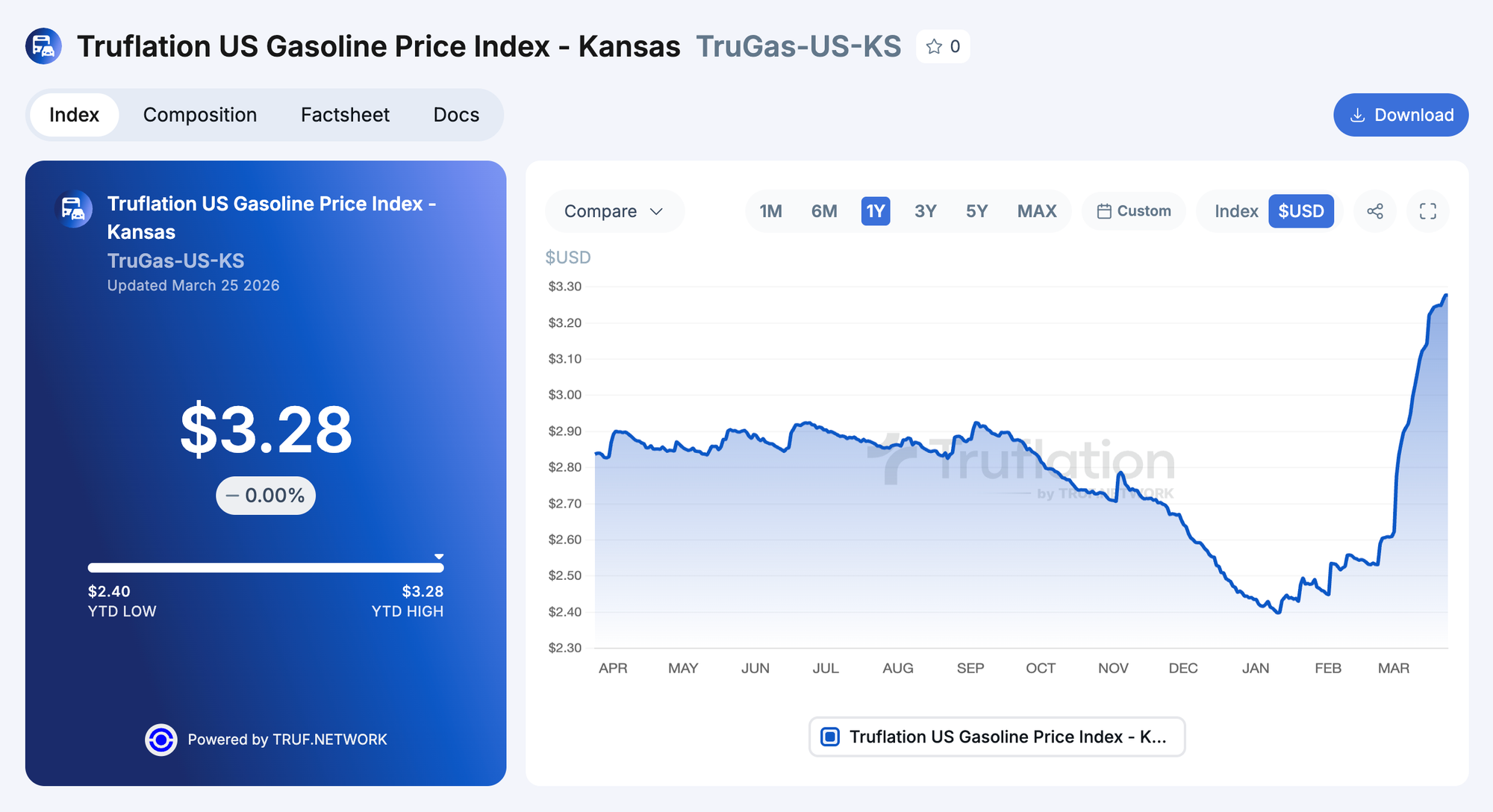
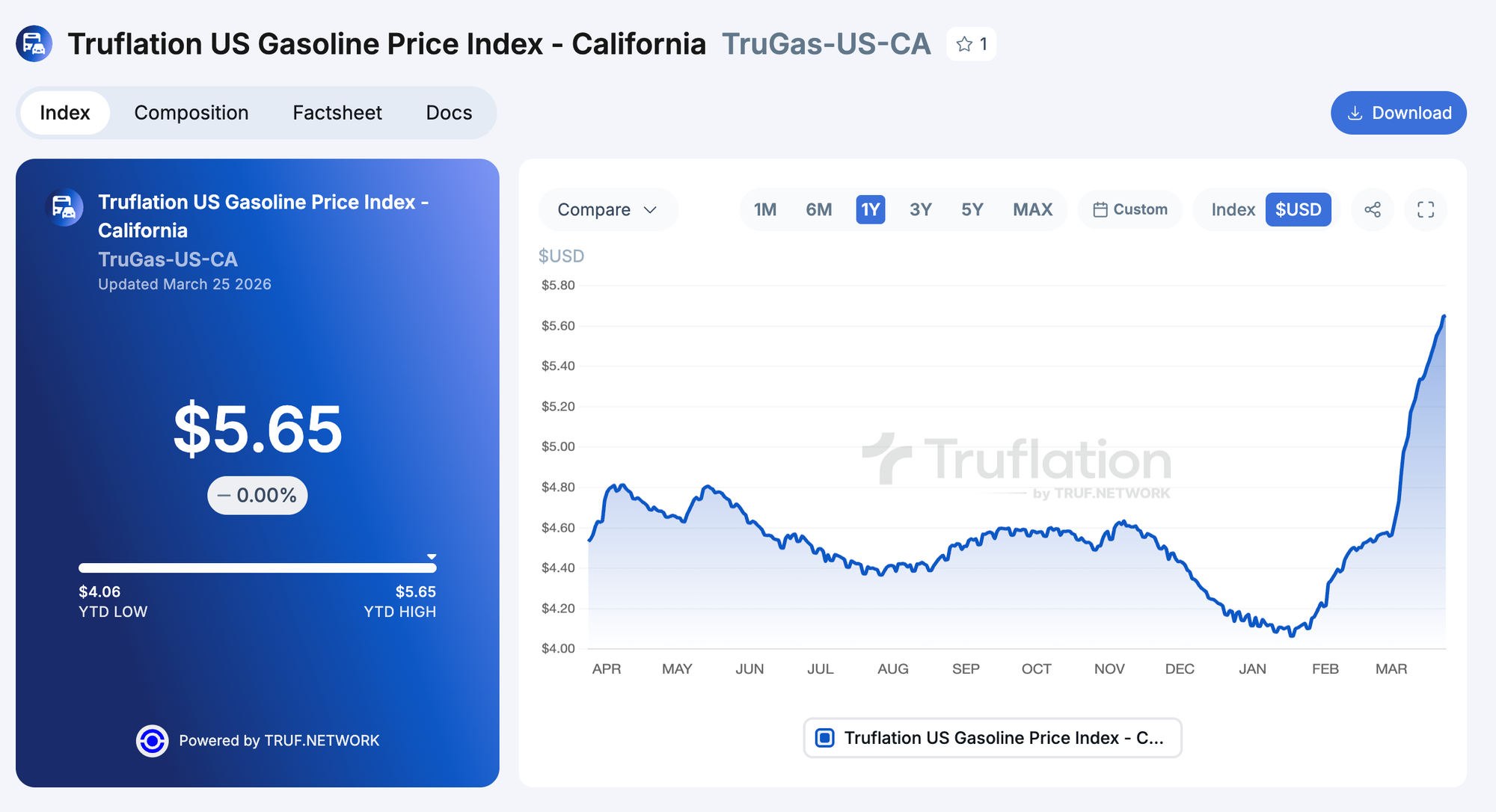
Today, the average national gas price in the US reached $3.98 according to granular data from 5 different providers.
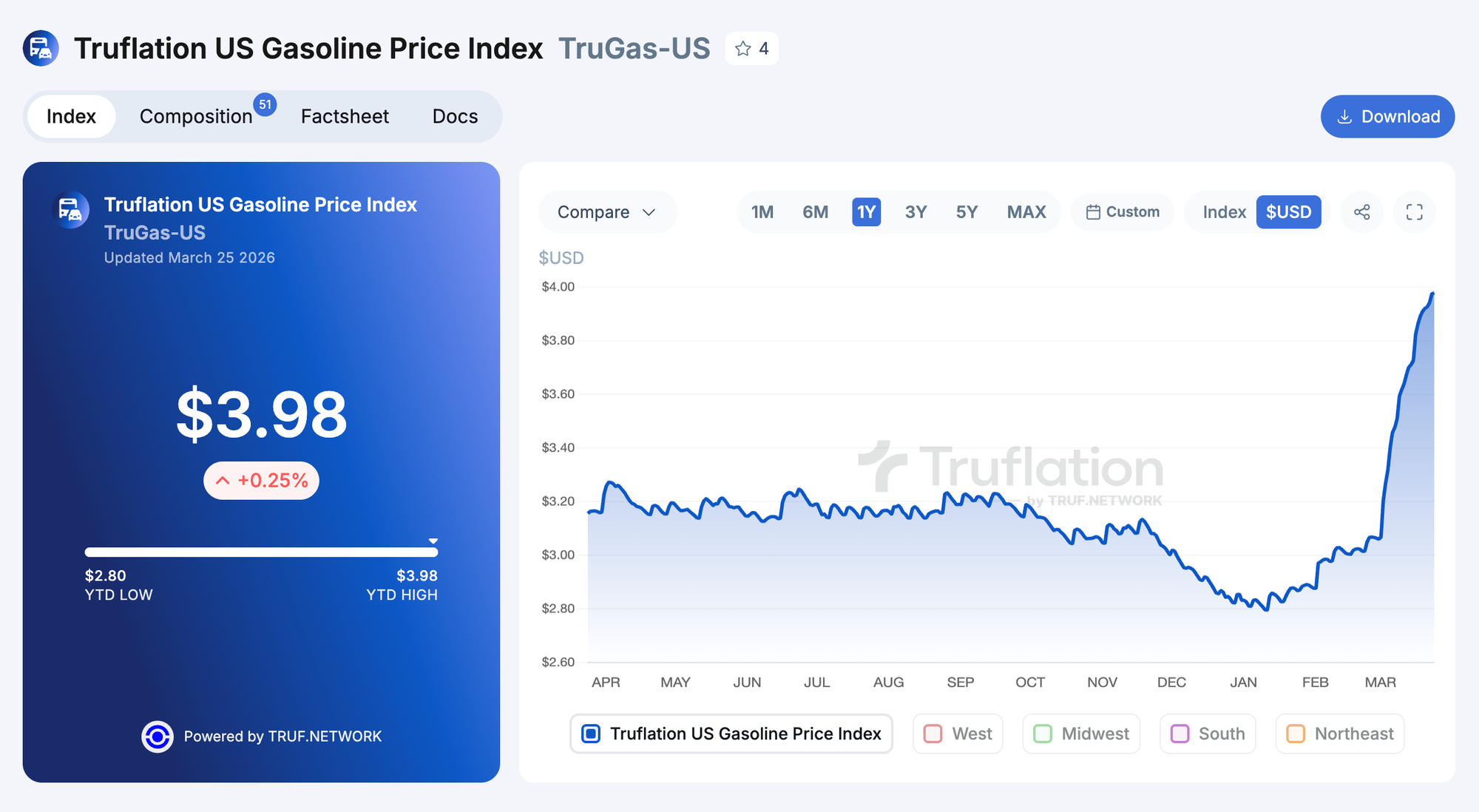
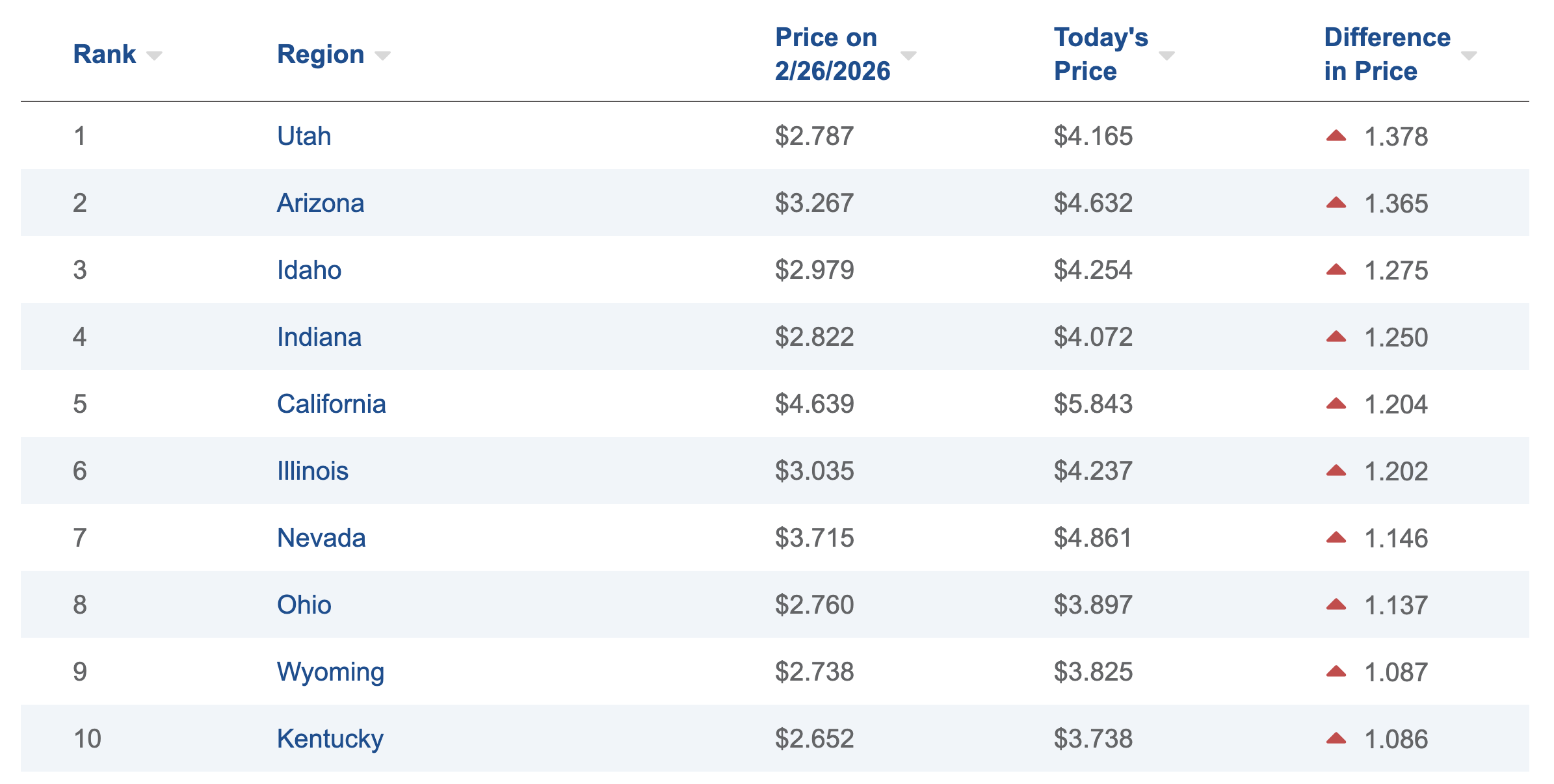
The lowest prices at the pump were registered in Oklahoma ($3.25) and Kansas ($3.28), and the highest in California (%5.65):
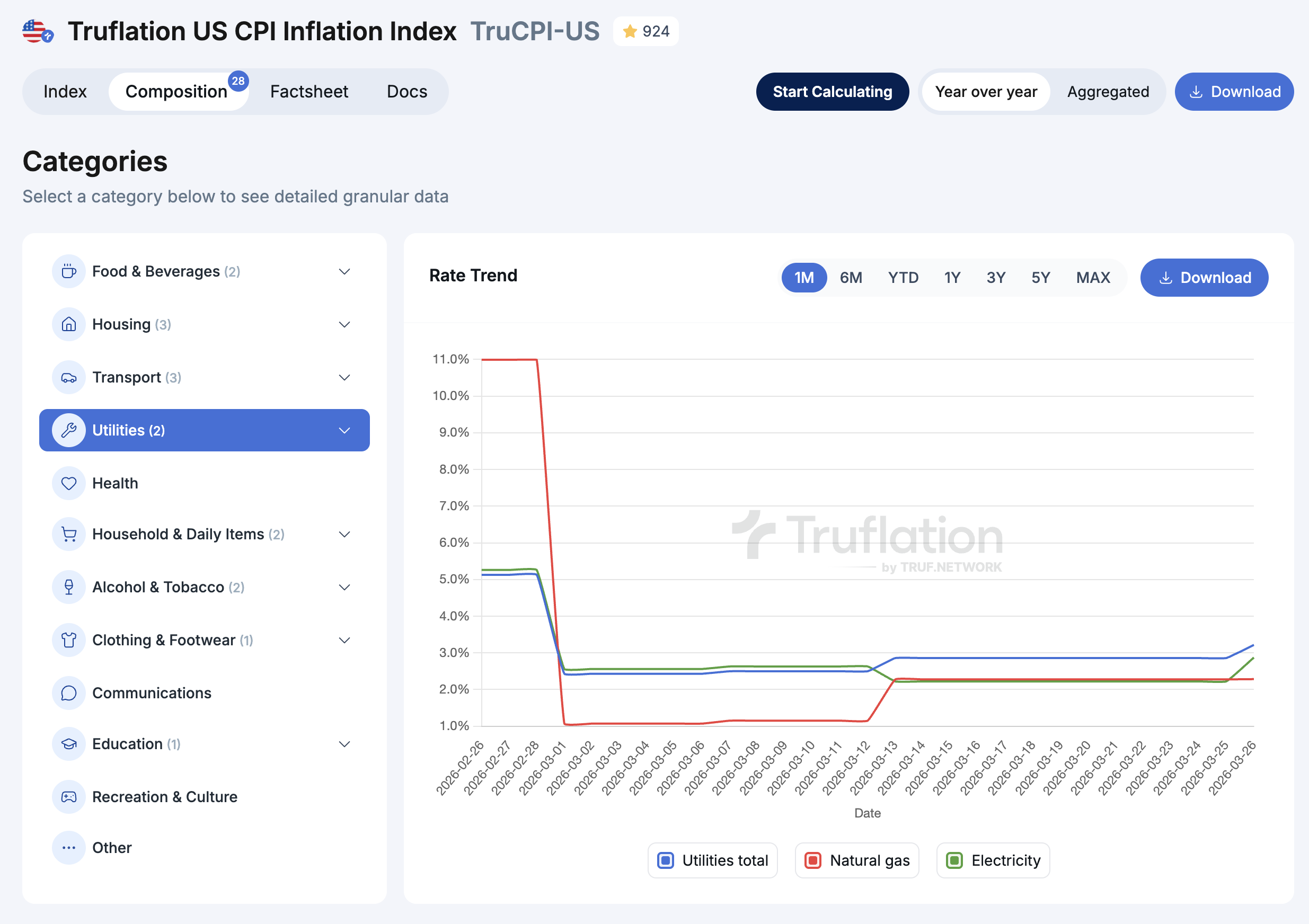
Utilities increased by> 0.3%, mainly driven by Electricity, which rose 0.6%, overall adding 0.02% to headline inflation.
Food has been steadily climbing up since 18th February lows (-2.16%), after months of disinflation and even deflation. Today, food increased from 0.37% to 0.46%, adding an extra 0.01% to our headline inflation.
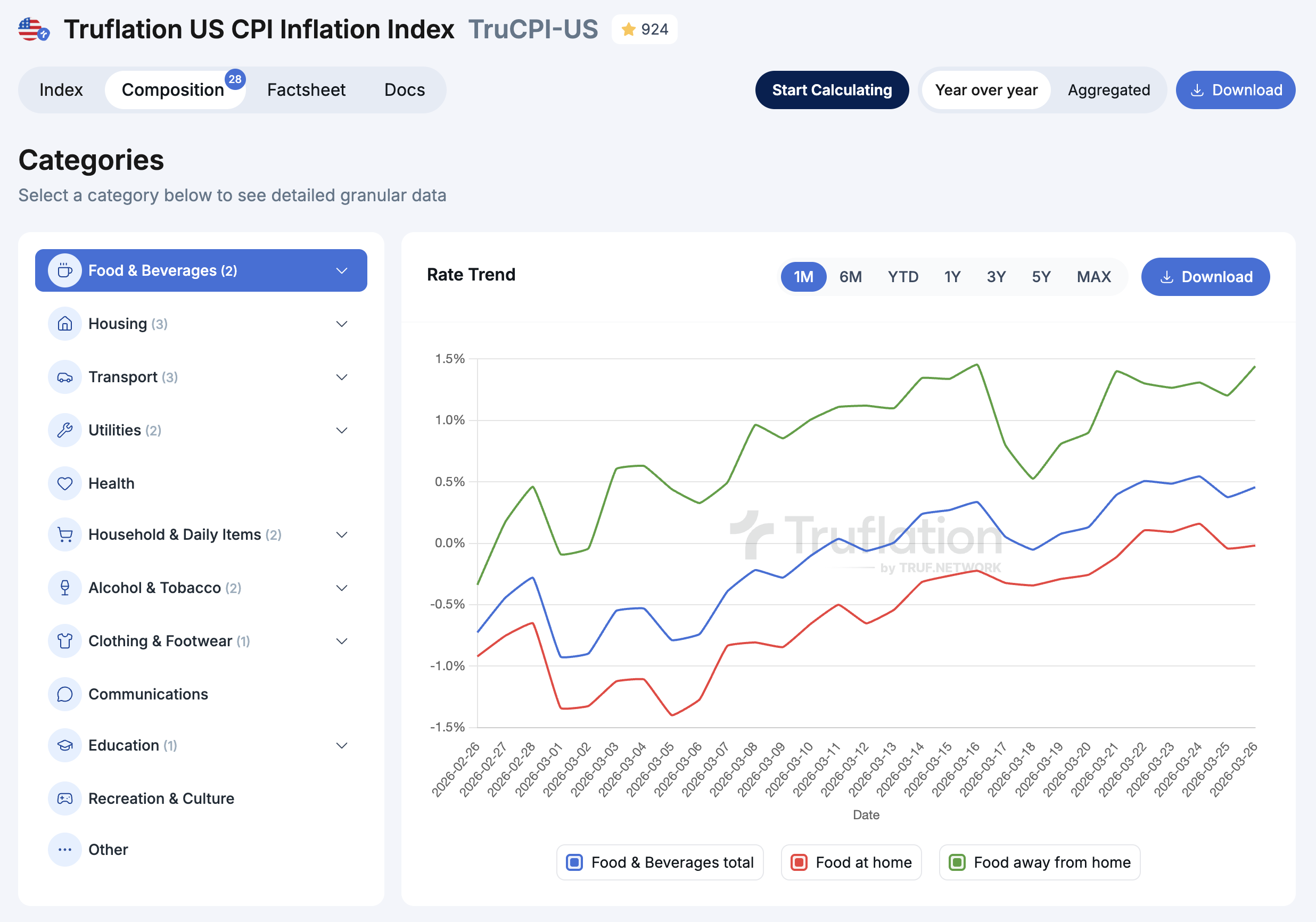
You can track the daily drivers of inflation in Truflation's CPI composition tab.