
Oil Shock Effects on Consumer Inflation and Truflation Gasoline Index.

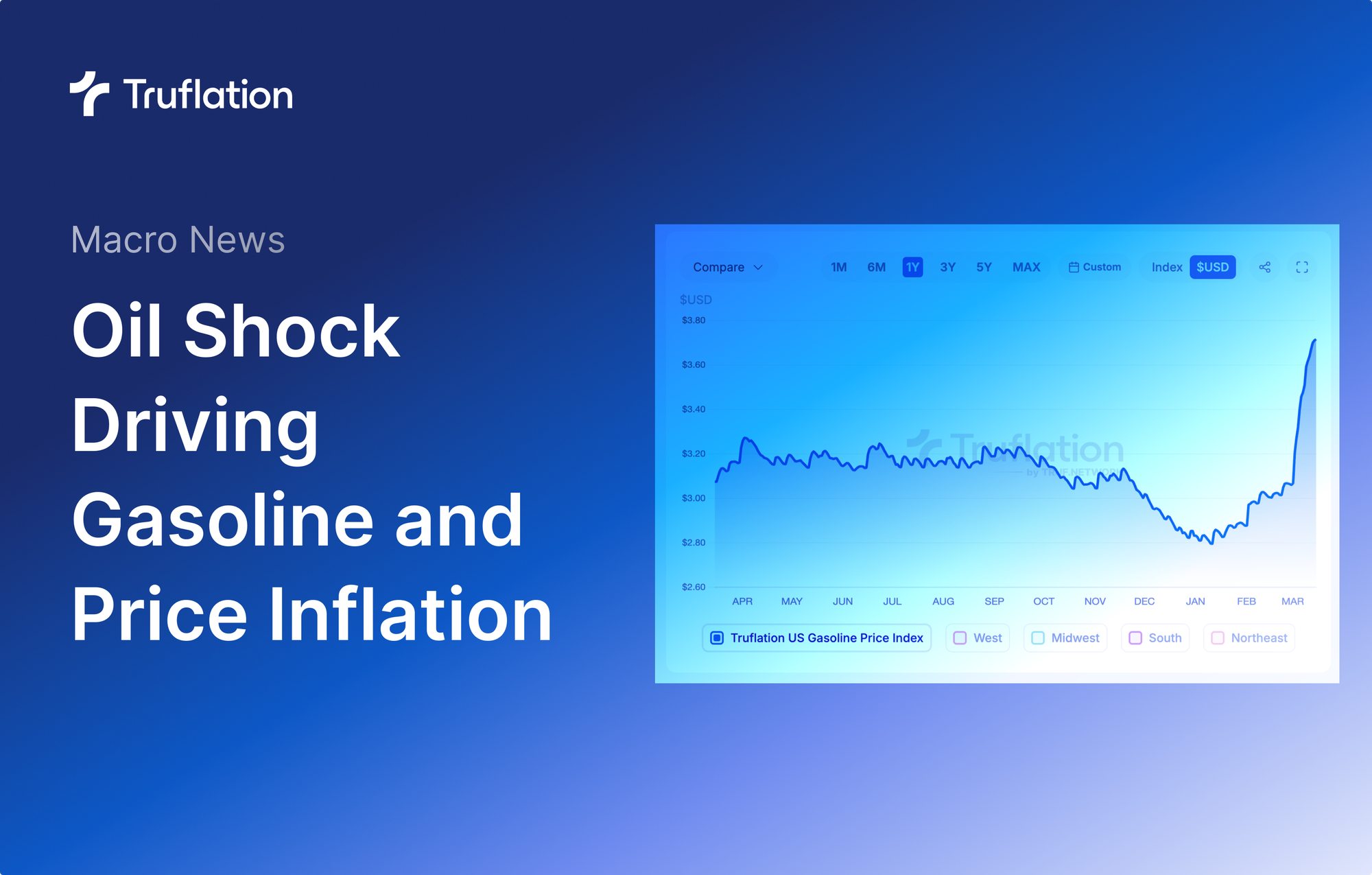
Geopolitical escalation in the Middle East, triggered by US-Israeli strikes on Iran commencing February 28, 2026, has produced the largest oil supply disruption on record. Oil prices were gradually rising even before that, from mid-December, due to global tensions and increased seasonal demand.
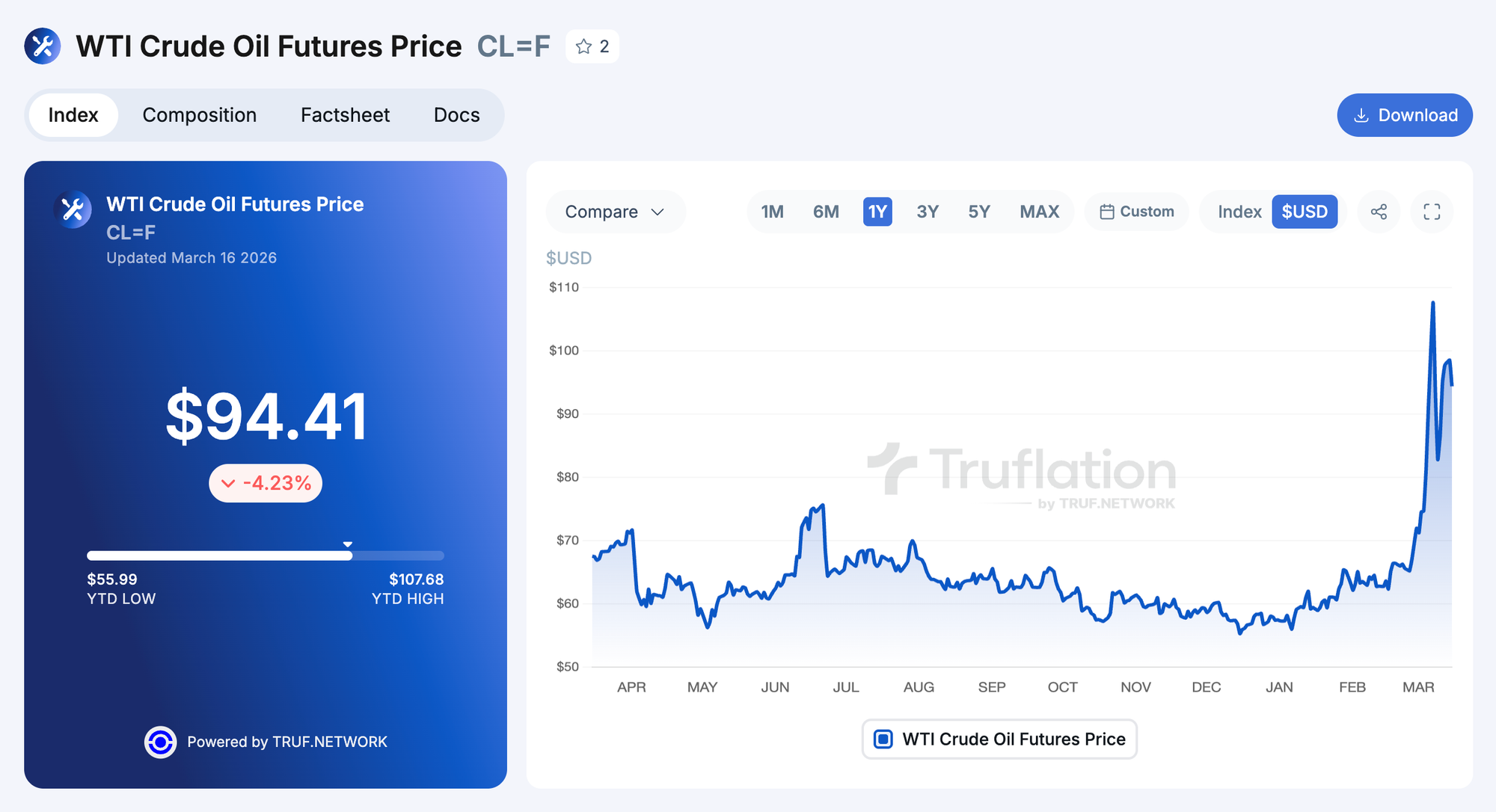
Now, the International Energy Agency (IEA) reports global supply contracting by approximately 8 million barrels per day in March due to the blockade of the Strait of Hormuz, through which roughly 20% of world oil and LNG transit, combined with retaliatory production cuts of up to 10 million bpd by Gulf producers.
How is Oil Shock Affecting Consumers?
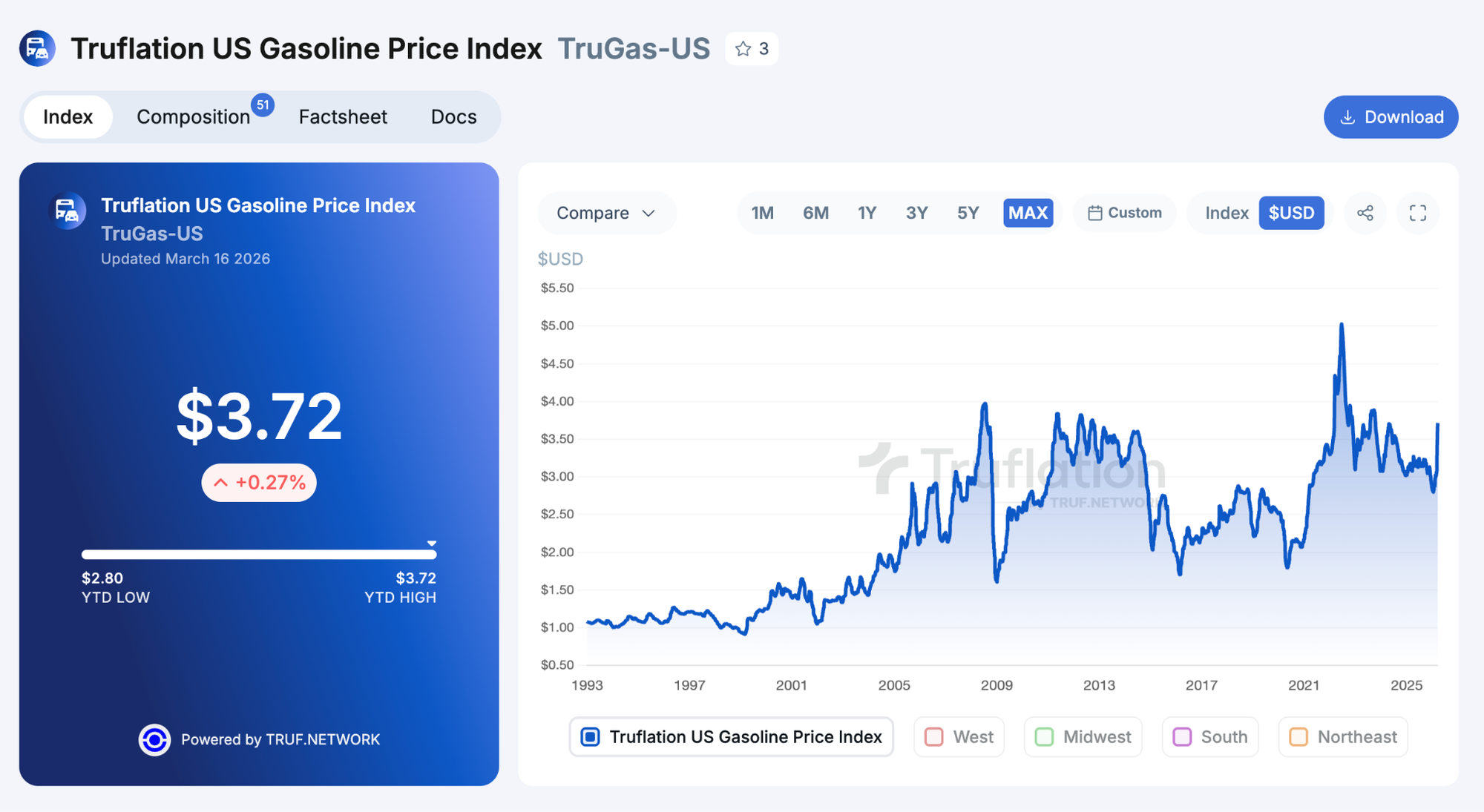
The massive oil shock has surprisingly rapidly passed through to retail fuel costs. US national average gasoline prices have climbed to approximately $3.72 per gallon (as of March 17), up sharply from pre-conflict levels near $2.90–$3.00 and representing gains of 19–20% or 50–60+ cents per gallon in recent weeks, the highest since 2023.
What’s the effect of Gasoline on CPI inflation?
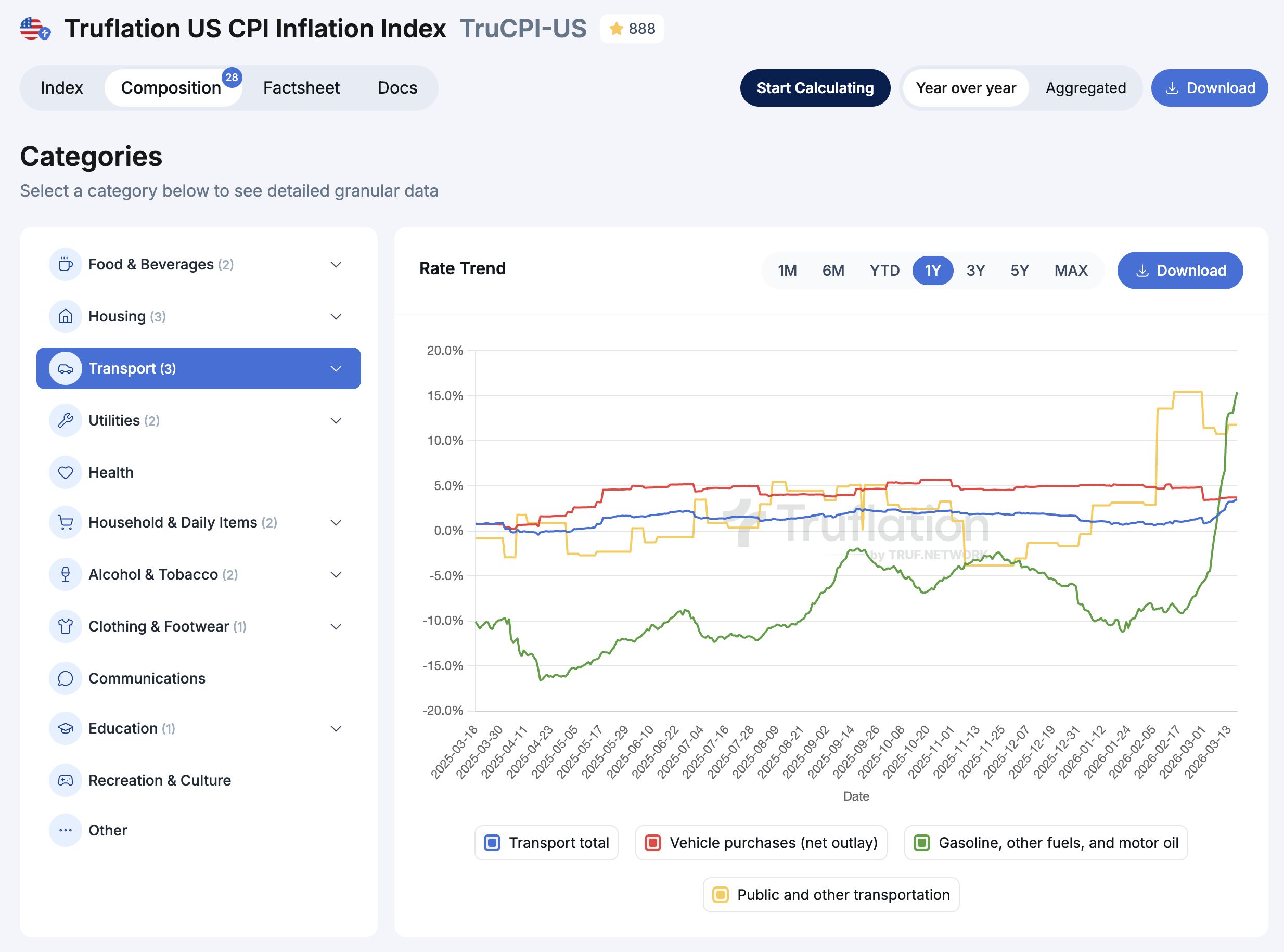
The gasoline component exerts an outsized influence on headline inflation metrics, accounting for about 3.2% of Truflation’s CPI index. The recent single-day 5.7% rise in gasoline prices was reflected almost immediately in our real-time CPI index, resulting in a 0.13% headline inflation spike and downward movement in the transportation category despite the lowering prices of vehicles and public transportation.
Other categories, like food and goods prices, have also begun to climb after months of declines, potentially due to rising shipping costs and higher energy costs for production and oil-related components.
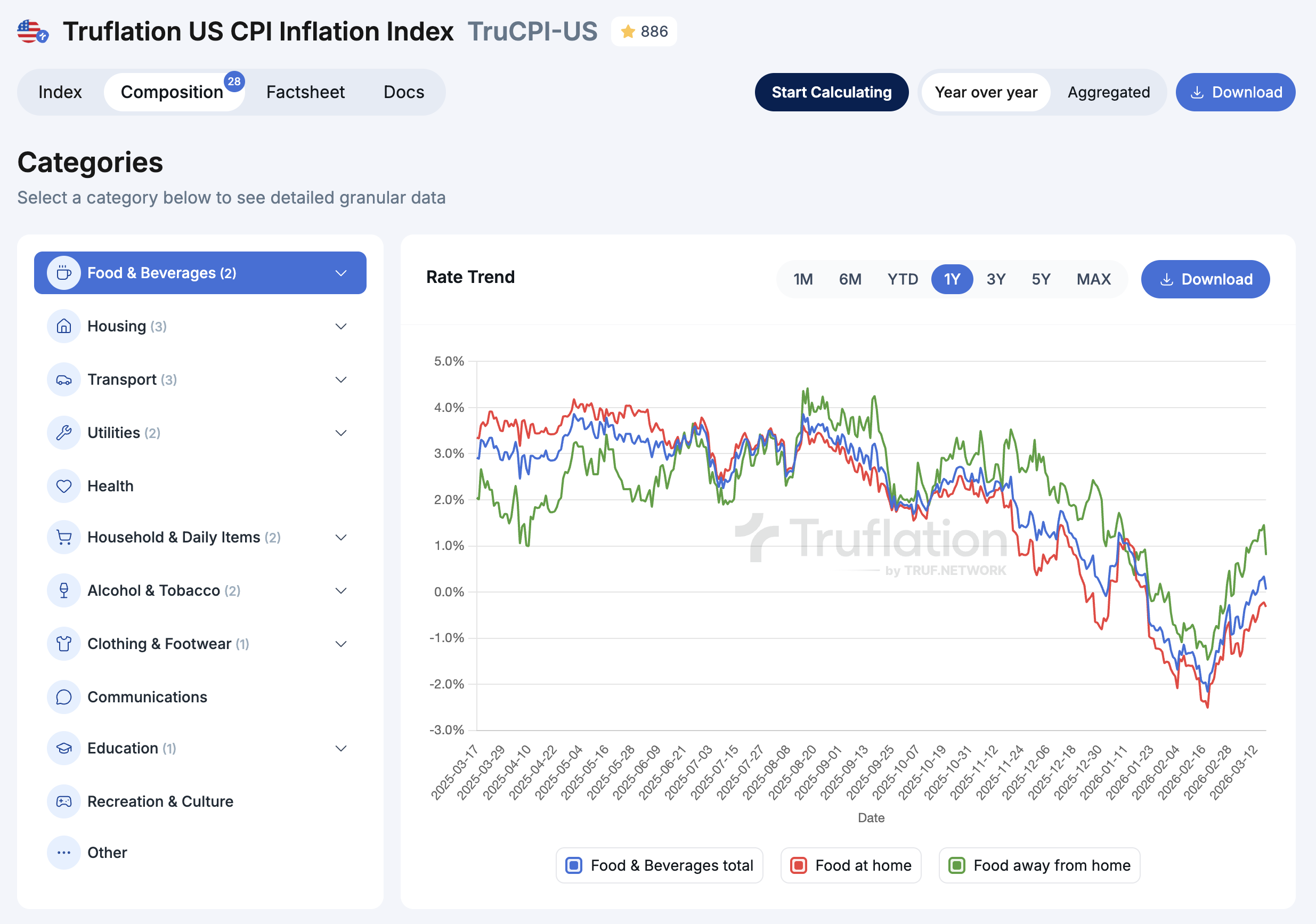
Further price decreases in utilities, food, and other products dependent on oil or energy are expected to show up in consumer inflation with various delays.
We can already see this effect in commodity futures, which serve as an early gauge of market pressures. The oil crisis is already affecting the prices of wheat, urea (made from oil and used in fertilisers), helium needed in semiconductor production, and aluminum, the production of which requires a lot of energy.
Real-time inflation data captures the real-time market situation.
Following the crisis in the Middle East, Truflation’s real-time US CPI Inflation Index jumped from a year-to-date low of 0.68% YoY as of Feb 8, to currently 1.52% YoY, still below the Fed’s 2% target or the official BLS CPI of 2.40%, but much higher since the oil prices started climbing.
Truflation data captured the gasoline price acceleration that everyday consumers already experience at the pump, while the official CPI and PCE metrics have remained flat and will not register this change for another month or more.
Read more about the BLS CPI delay and Truflation's data 45-day lead.
Recent daily and weekly moves in the Truflation energy sub-indexes also reversed prior strong disinflationary trends, with energy categories posting large jumps of > 5% tied to oil pass-through and exerting significant upward pressure on the CPI.
Unlike lagged BLS releases, Truflation’s methodology registers these shifts near-instantaneously, providing wealth managers and analysts with an early signal of re-accelerating headline readings ahead of official prints.
What's next for oil?
Prolonged closure of the Strait of Hormuz could keep oil prices near or even above 100 per barrel and elevate full-year inflation forecasts by 0.5–1.0 percentage points or more, while also affecting US GDP and, indirectly, adding to inflation through transportation and logistics costs.
Market Implications
- Inflation outlook: Upward revision risk to 2026 CPI/PCE trajectories.
- Fed Policies: potential delay in Federal Reserve easing cycles.
- Bonds: Higher yields on inflation-sensitive Treasuries.
- Equities: Energy sector outperformance; broader indices face margin pressure from elevated input costs.
- Crypto/Precious Metals: Renewed interest in inflation-hedging assets amid energy volatility.
- Futures: further spikes in energy and oil-dependent commodities.
Timely Launch: The Truflation Gasoline Index
To better monitor the current volatile energy market, Truflation recently launched the Truflation Gasoline Index, an independent, high-frequency aggregator of pump prices drawn from multiple verified data partners at national, regional, and state granularity.
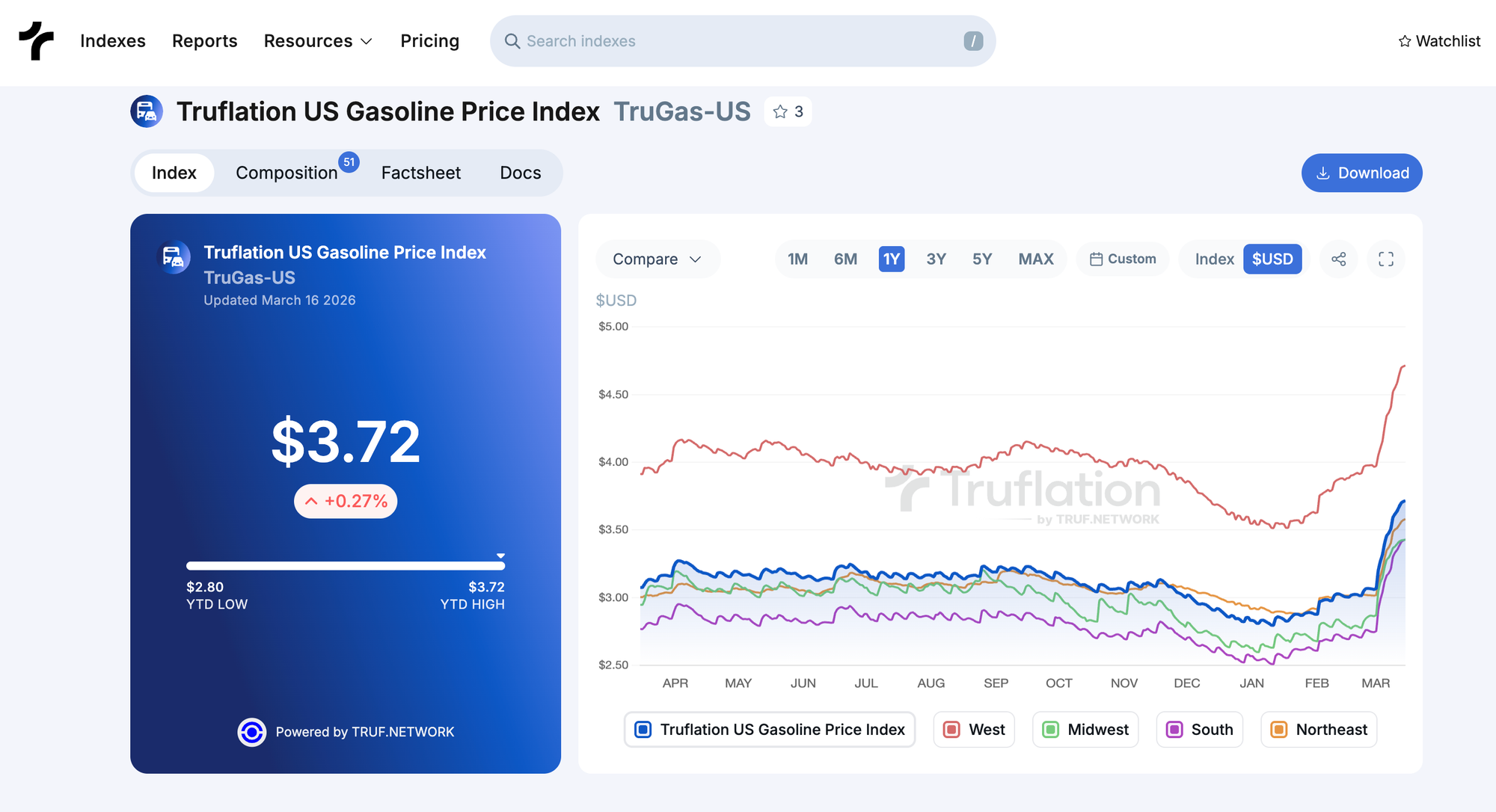
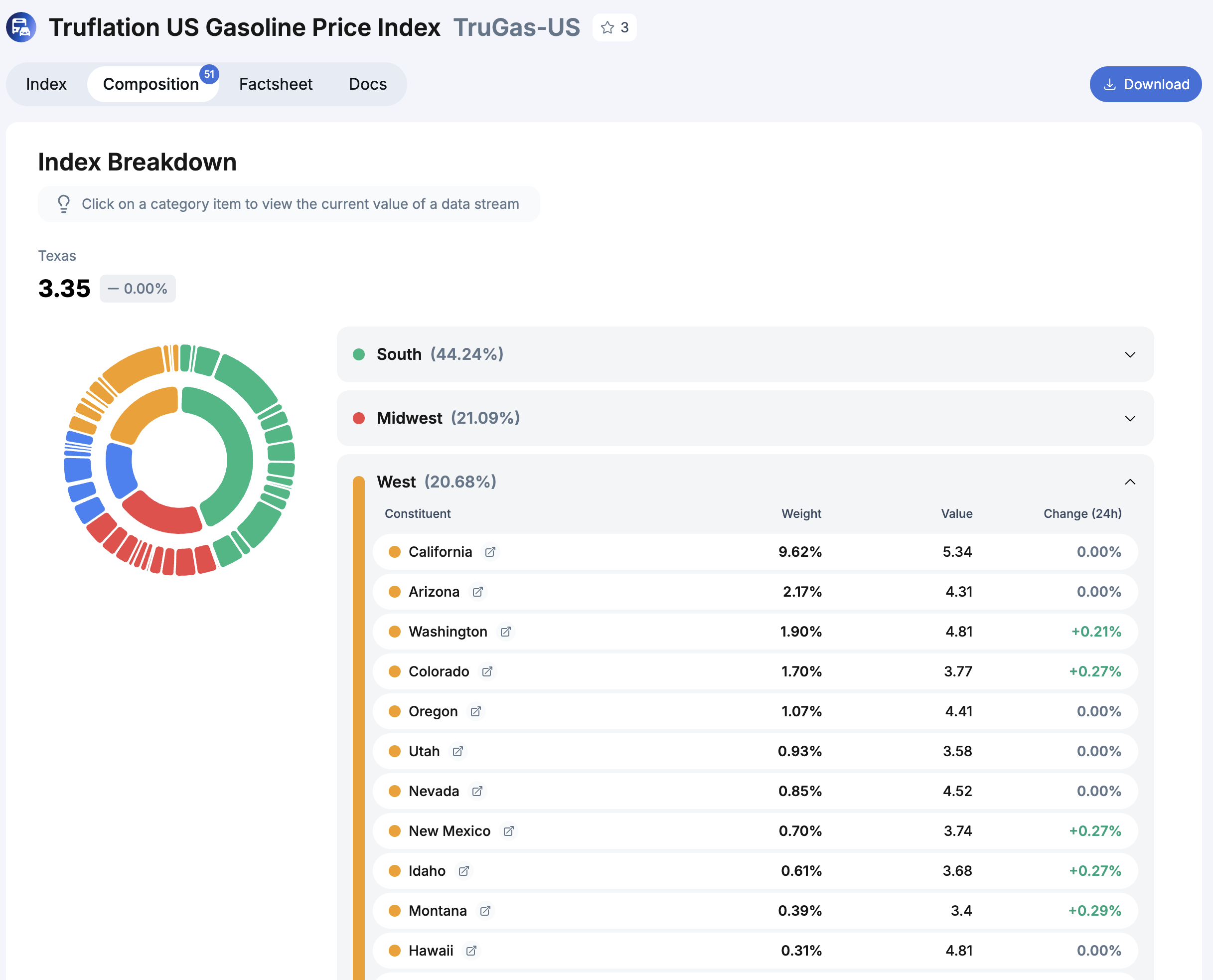
This index enables users to gain direct visibility into one of the most important yet volatile drivers of the headline inflation, both CPI and PCE.
Daily price movements across the US, with regional and state-level granularity, enable traders, analysts, and businesses to monitor global and local effects of geopolitical, seasonal, and supply-driven swings without waiting for the monthly BLS data.
Usage of multiple data sources limits bias and creates a more reliable and resilient national and regional averages for real prices at the pump.
Read more about the Truflation Gasoline Index.
They are talking about us
Today, Thomas Kralow, a stock trader and influencer, has shared Truflation data while covering the effects of oil on US GDP, inflation, and wider macroeconomics.