
Slasher Miran vs. Fed Hawks – FOMC 28-29 April

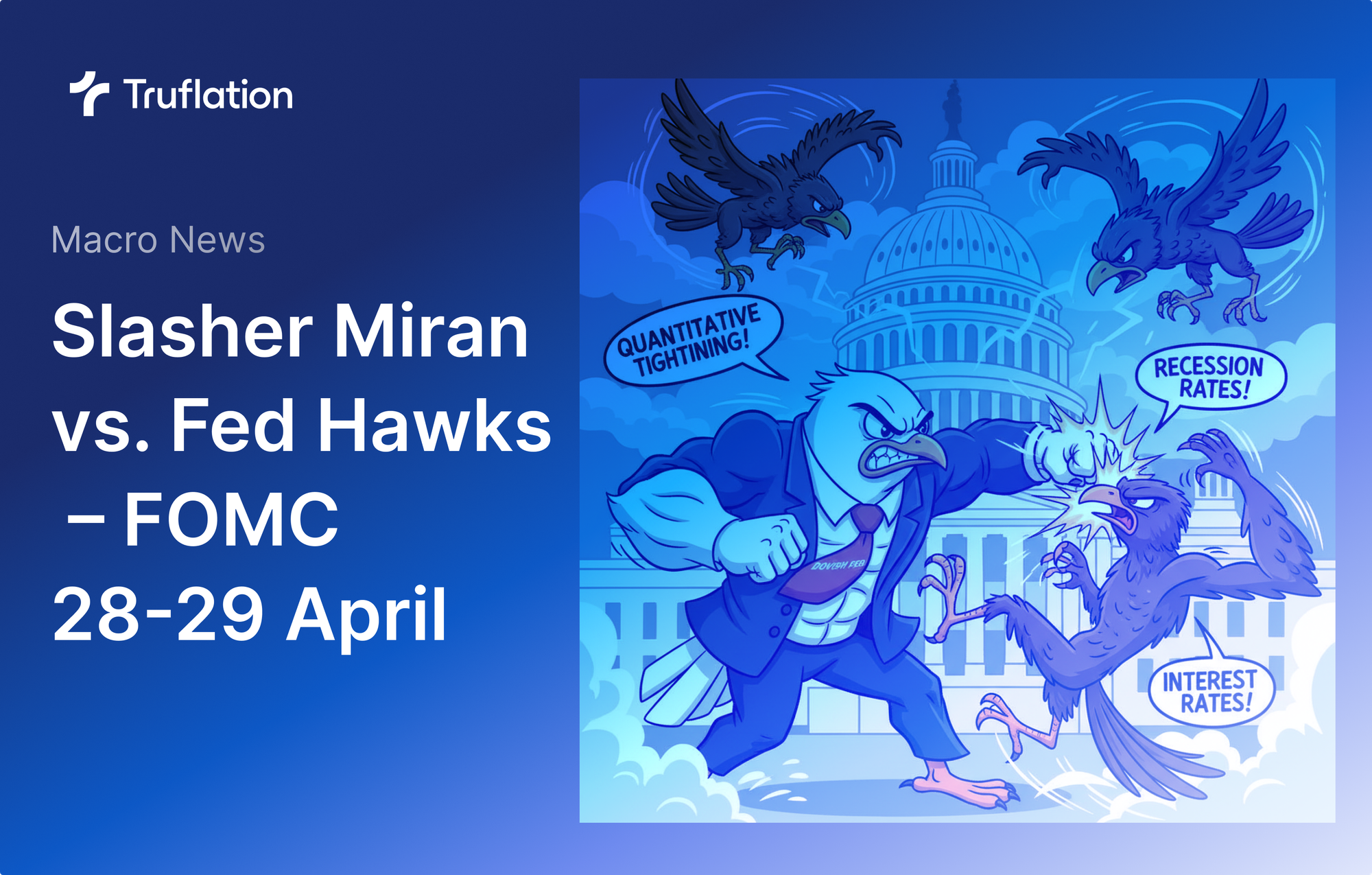
Yesterday’s FOMC Bloodbath Was the Most Divisive Meeting in 34 Years. Here’s the Full Scoop (and What It Means for Your Next Rate Cut)
Yesterday’s FOMC meeting on April 29, 2026, was not the snooze-fest everyone expected. The Fed held the federal funds rate steady at 3.5%–3.75% for the third meeting in a row – totally priced in.
But then? Four dissents. The most since 1992. One lone dove voting for a cut. Three hawks clawing back against any hint of easier policy. Throw in the Iran war jacking up energy prices, a slowing jobs market, and Jerome Powell wrapping up his chairmanship… and you’ve got drama worthy of a Netflix limited series.
Welcome to the era of Stephen “Slasher” Miran – the Fed’s most persistent rate-cutter – and the hawkish trio who just put the market on notice. Let’s dive in.
The FOMC Decision in Plain English
The statement was classic Powell-era data-dependent: hold rates, watch incoming data, evolving outlook, balance of risks. They kept that subtle “easing bias” language, hinting that additional adjustments (i.e., cuts) are still on the table. But the vote was a messy 8-4. Why the chaos? Geopolitics. The Iran conflict is spiking global energy prices, feeding inflation fears on top of an already sticky backdrop. Labor market? Softening. Growth? Decent but not booming. Classic stagflation-lite vibes.
Powell, in what could be his final presser as chair (he’s staying on the Board post-May), stressed no one is calling for a hike right now… but the dissents screamed otherwise. Markets? The dollar popped. Bonds sold off. Stocks mixed. Everyone’s recalibrating expectations for June (or later).
Meet the Star of the Show: Stephen “Slasher” Miran, the Fed’s Perpetual Dove
This guy is why the nickname fits like a glove. Governor Stephen Miran (Trump appointee, sworn in September 2025) dissented again – his sixth straight meeting – voting for an immediate 25-basis-point cut. He’s been the most aggressive voice on the FOMC since day one, previously floating 50bp moves and even 150bp total easing in 2026. Alone. Every time.
Who is Stephen Miran, really?
Harvard PhD in economics (student of Reagan-era legend Martin Feldstein), Boston University undergrad. Spent years in hedge funds (Hudson Bay Capital), then jumped into Trump World: senior Treasury advisor during the first term (pandemic fiscal stuff), then Chair of the Council of Economic Advisers. He’s a supply-sider at heart – thinks deregulation, tariffs (he helped architect the reciprocal tariff plan), and pro-growth policies give the Fed room to ease without inflation exploding. Appointed to the Fed Board to fill an unexpired term ending January 2026, but still there, keeping the seat warm for Kevin Warsh. Short-timer, but he’s making every vote count.
Why does Miran keep dissenting for more cuts?
Stephen Miran is laser-focused on the labor market and growth risks. He worries the economy is slowing faster than the data shows, and he believes the Fed can afford to slash rates because supply-side reforms will keep inflation in check long-term. Even with oil prices jumping from the Middle East mess, he’s still in “cut now” mode. Classic dove in a hawk’s world – and unapologetic about it.
Is Miran buddies with Kevin Warsh?
Close enough. Miran has publicly hyped Warsh (Trump’s pick for the next Fed Chair) as a “fantastic pick” – persuasive, respected, knows the Fed inside-out, credible with colleagues. He straight-up assumes Warsh will slide into his expiring Board seat before taking the chair. Professional admiration? Definitely. Trump-world allies? Absolutely. Actual BFFs swapping texts? We don’t have the group chat, but Miran’s cheerleading sounds like the ultimate Fed handoff.
The Hawkish Trio: Profiles of the Dissidents Who Said “Slow Your Roll on Easing”
Not all dissents are created equal. Miran wanted lower rates. These three supported the hold but revolted against the statement’s dovish tilt. They want neutral language – no “additional adjustments” implying cuts are the default next move. Translation: inflation risks (mostly due to energy shock) mean the bar for cuts is higher, and a hike isn’t off the table forever.
- Beth Hammack (Cleveland Fed President, since Aug 2024): Ex-Goldman Sachs powerhouse – co-head of global financing for 30 years. Stanford degree in quantitative economics and history. Finance lifer with serious risk-management chops. Newest kid on the block, but already one of the most hawkish voices. She’s all about discipline when inflation threats loom.
- Neel Kashkari (Minneapolis Fed President): The former TARP bailout architect and ex-Treasury/Goldman guy. Used to lean dovish during the inflation fight, but 2026 has him sounding increasingly hawkish – “we’re pretty close to neutral,” inflation persistence from tariffs and supply shocks worries him, and he’s been signaling little room left for cuts. Vocal, data-driven, and not afraid to push back.
- Lorie Logan (Dallas Fed President, since Aug 2022): Markets veteran through and through – spent 20+ years at the New York Fed running the System Open Market Account (literally implementing FOMC policy and managing the trillions in securities). First woman in the permanent Dallas role. Deep operational expertise means she knows exactly how policy transmits. Hawkish lean: reluctant on premature easing, especially with energy volatility.
These three regional presidents (voting this year) just sent a loud signal: the committee is splintering, and hawkish caution is gaining ground.
So… What Does This Mean for Future Rate Cuts?
Short version: The path to easier policy just got rockier. The easing bias survived this meeting, but with three hawks formally objecting, Powell (and incoming leadership) has less wiggle room. Markets are pricing fewer cuts – or pushing them further out. June? Still possible but markets give it a 5% chance. The Iran energy shock adds sticky inflation risk that doves like Miran are downplaying but hawks are highlighting.
Bigger picture? This feels like a preemptive assertion of Fed independence ahead of the Warsh era. Trump wants lower rates (and Miran delivered that vibe), but the committee is drawing lines. Powell staying on the Board adds continuity – or tension. Data will rule, but the official inflation numbers have been disappointingly sticky. Yesterday’s vote says the bar for cuts is higher than the statement lets on. We'll carefully watch May/June speeches, CPI/PCE prints, and oil prices. If energy cools and jobs weaken more, Slasher Miran might finally get his wish for more cuts. If inflation reaccelerates? Hawks win.
Bottom line: The Fed isn’t monolithic anymore. One persistent slasher, three vocal hawks, and a leadership transition in the works. Buckle up – monetary policy just got spicy. What do you think – is Miran the hero or the outlier?
For more real-time data and insights, get Truflation Premium and free credits.