
Trends driving Truflation CPI increases — April 2026
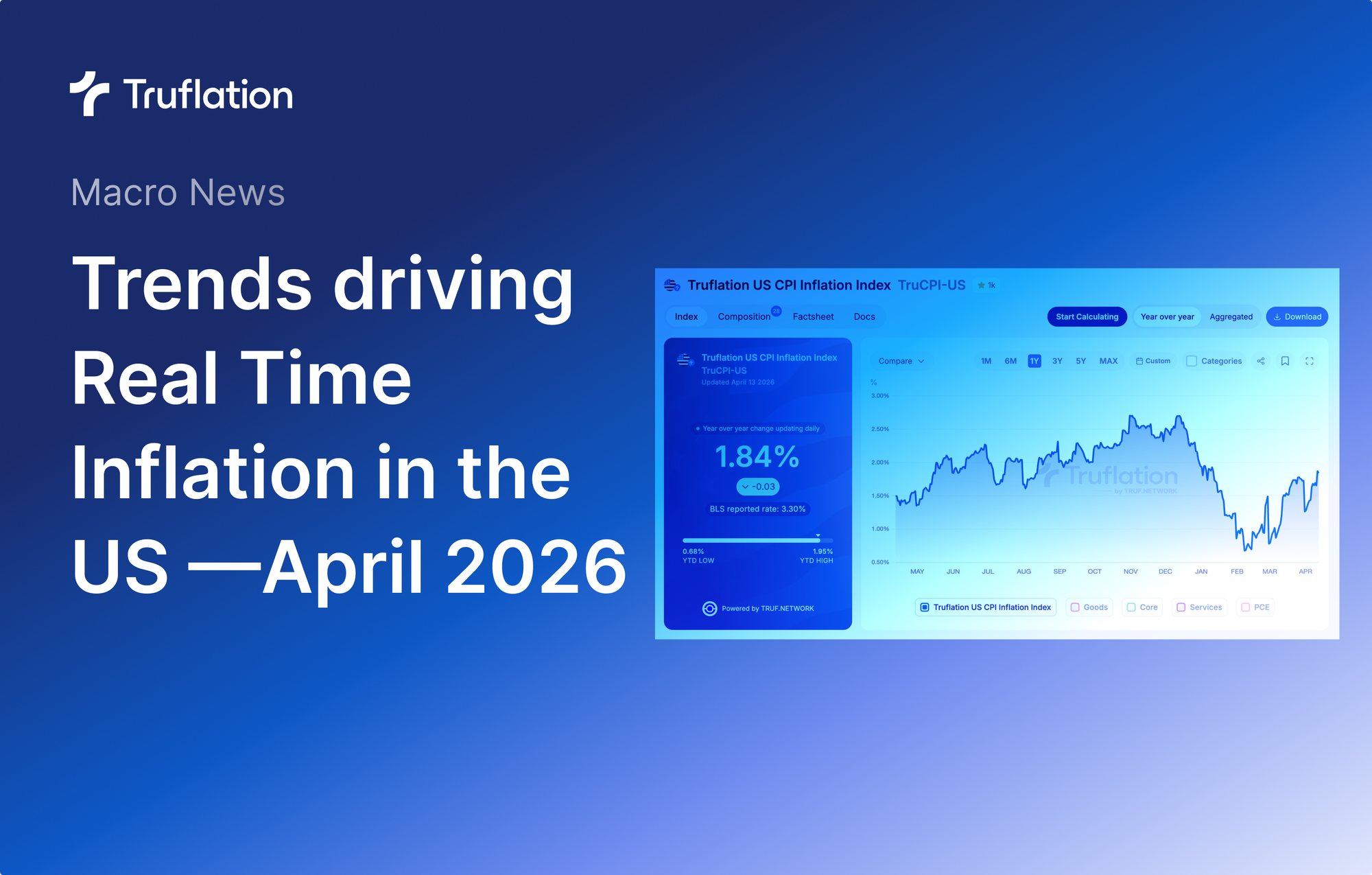
The US inflation today, April 13, is 1.84%, up from 1.26% at the beginning of the month.
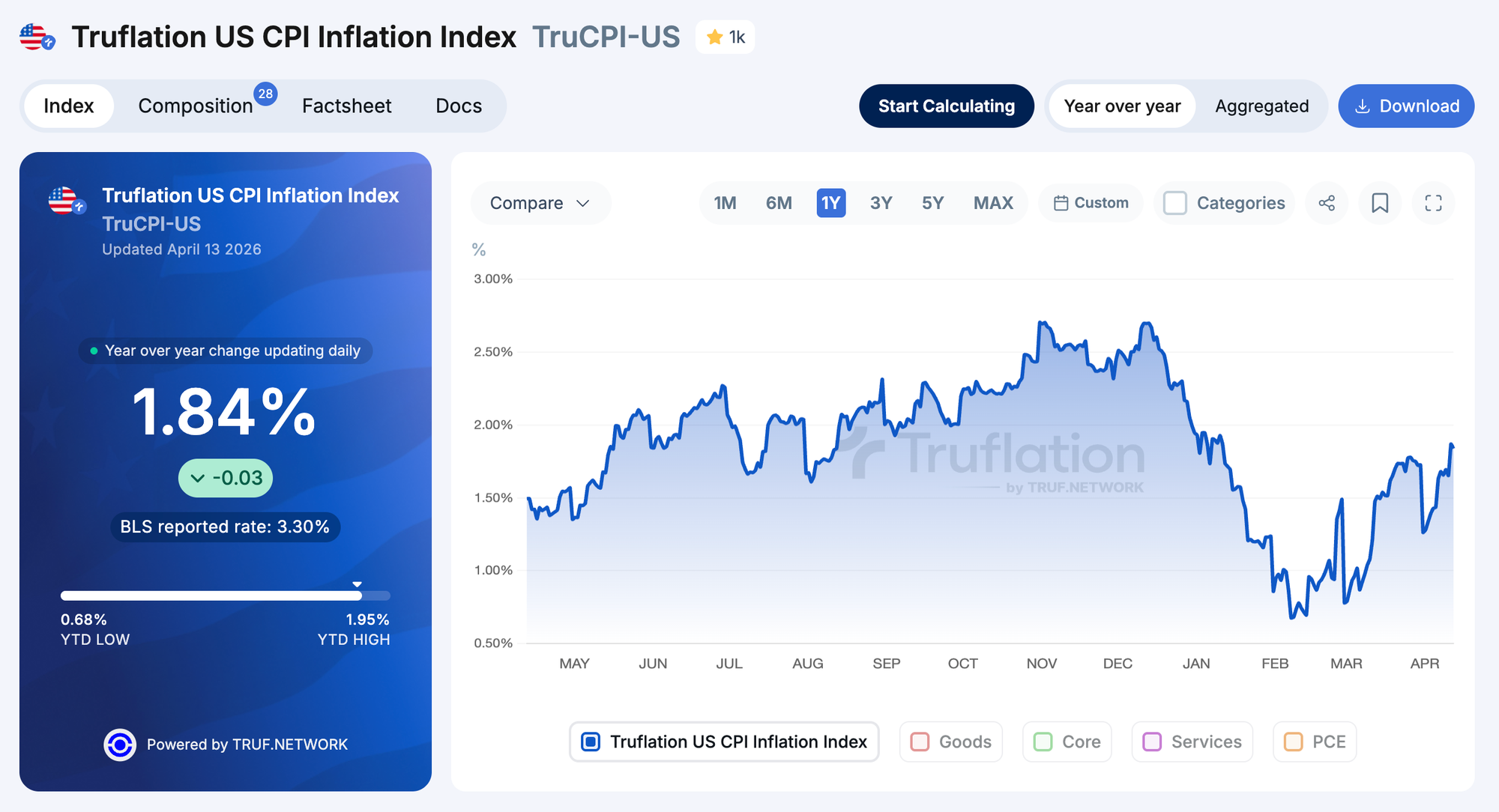
Multiple categories experienced a re-acceleration in inflation in April.
- Gasoline and fuel costs
- Clothing
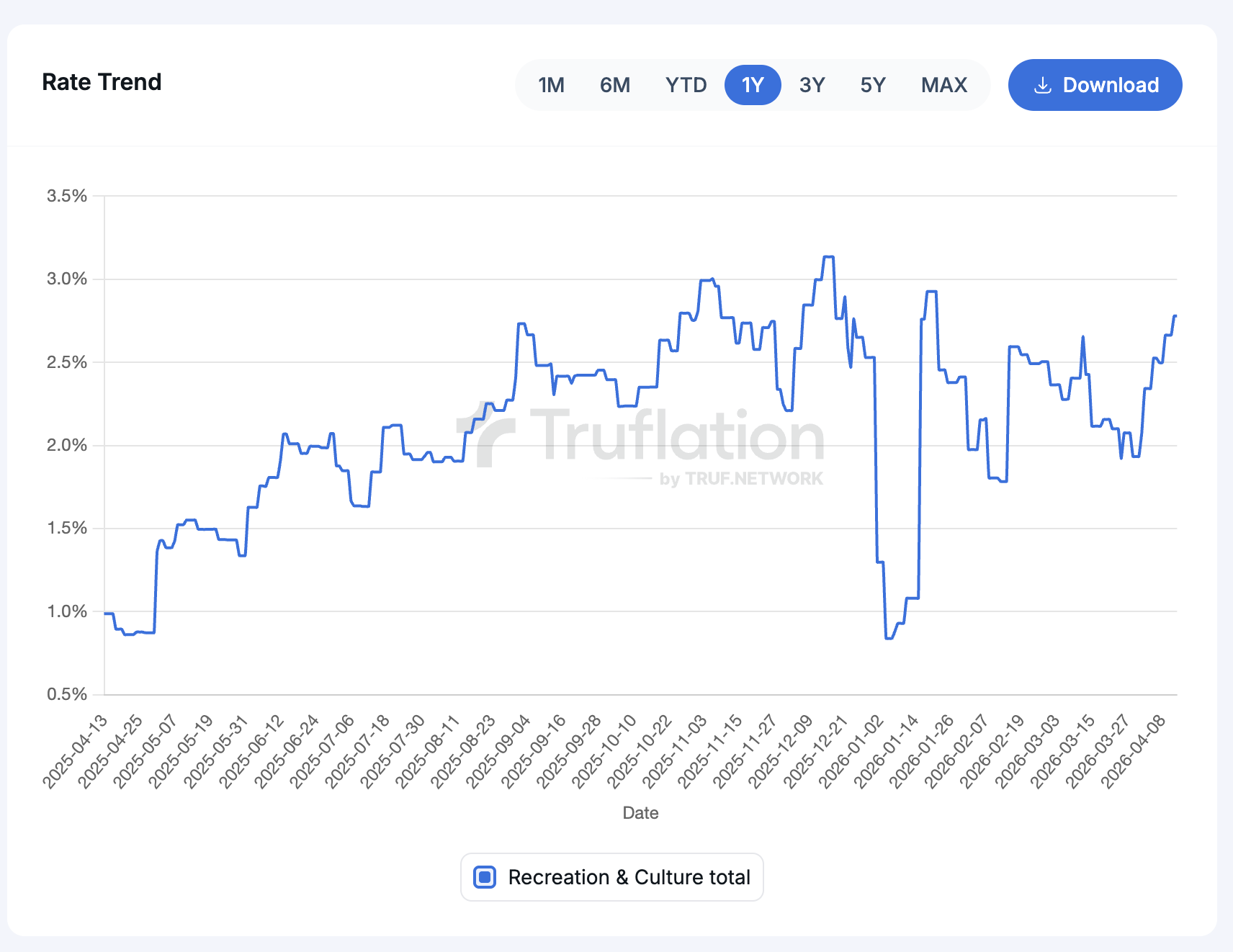
- Recreation (event tickets, subscriptions, and services)
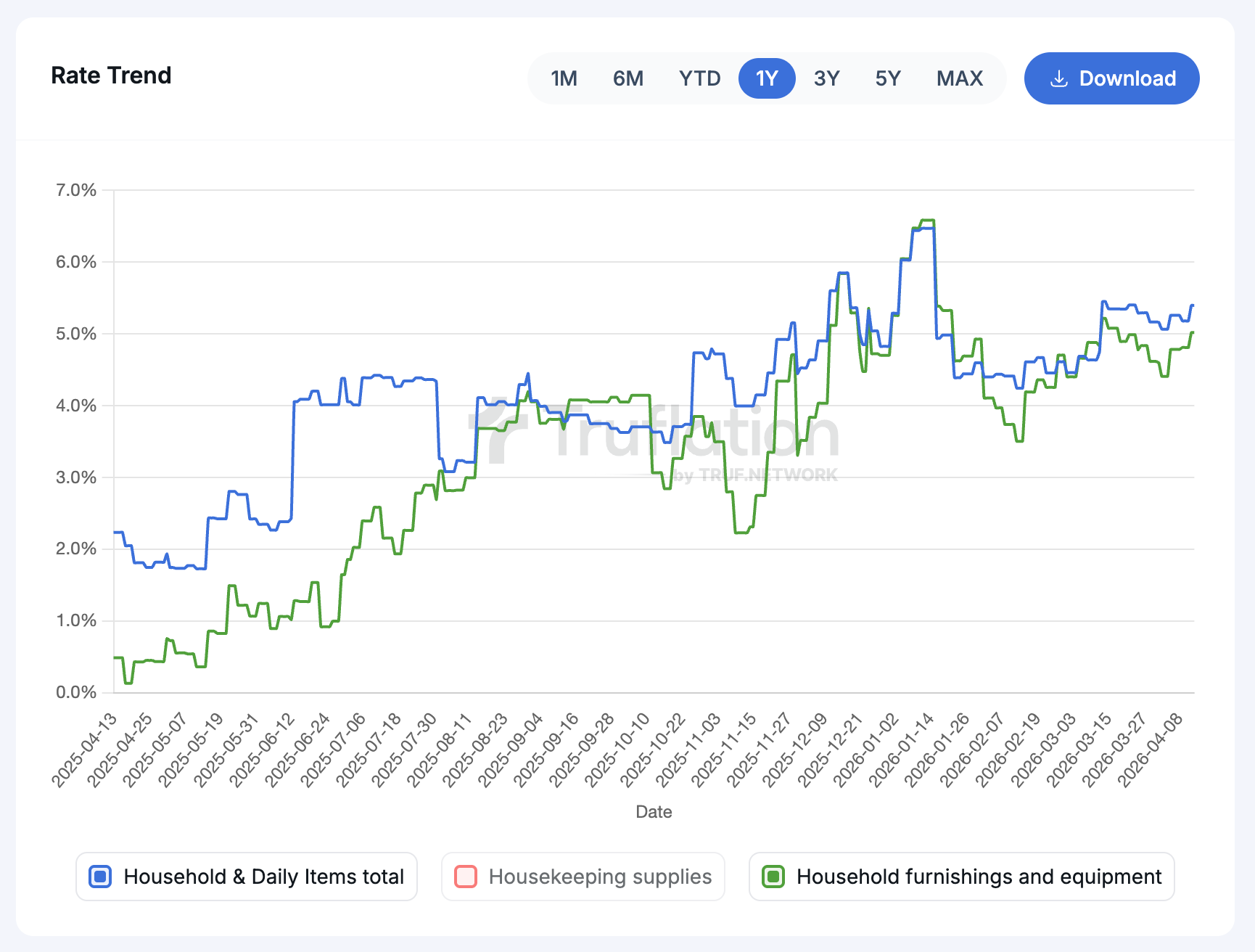
- Household goods
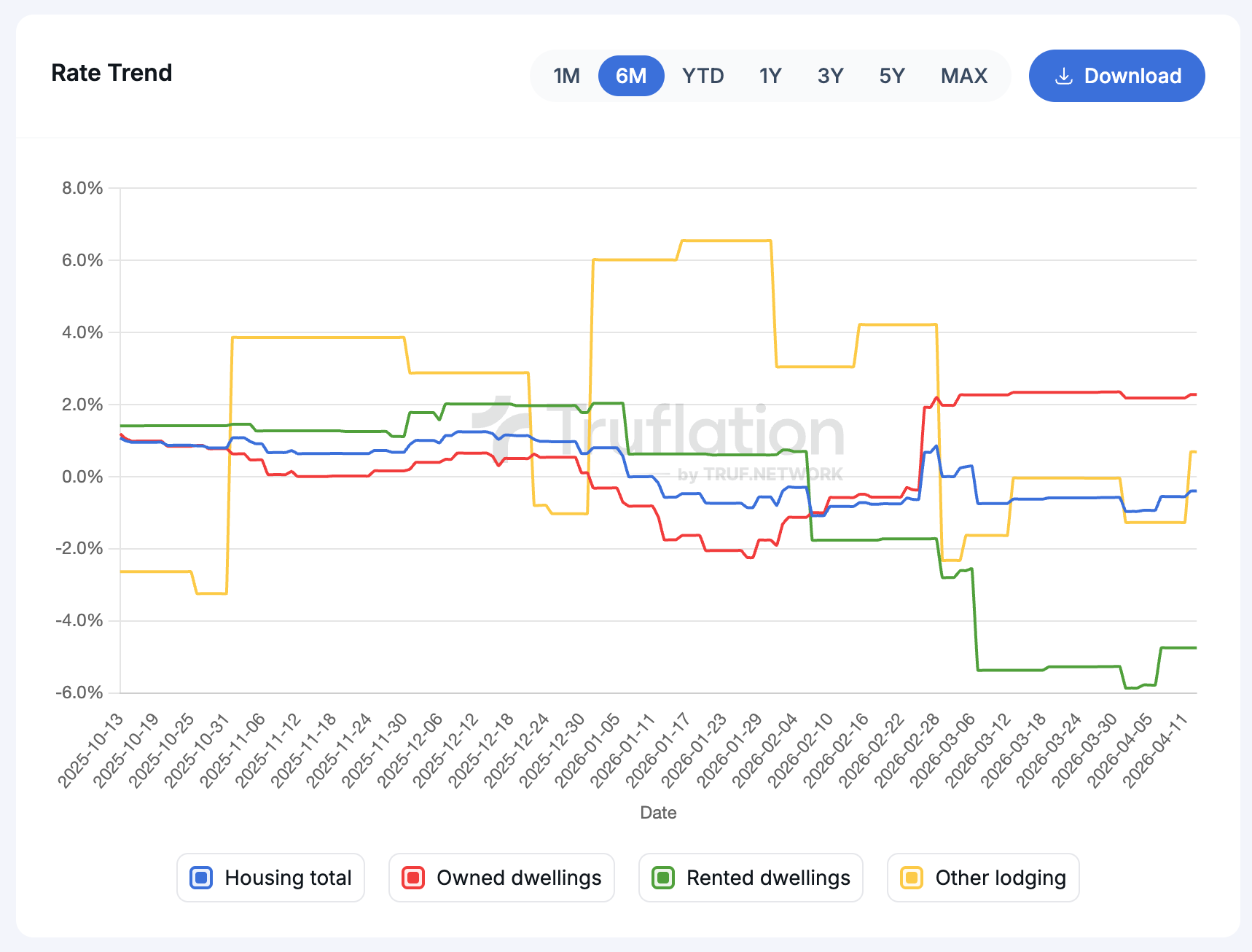
- Other lodgings (like short stays)
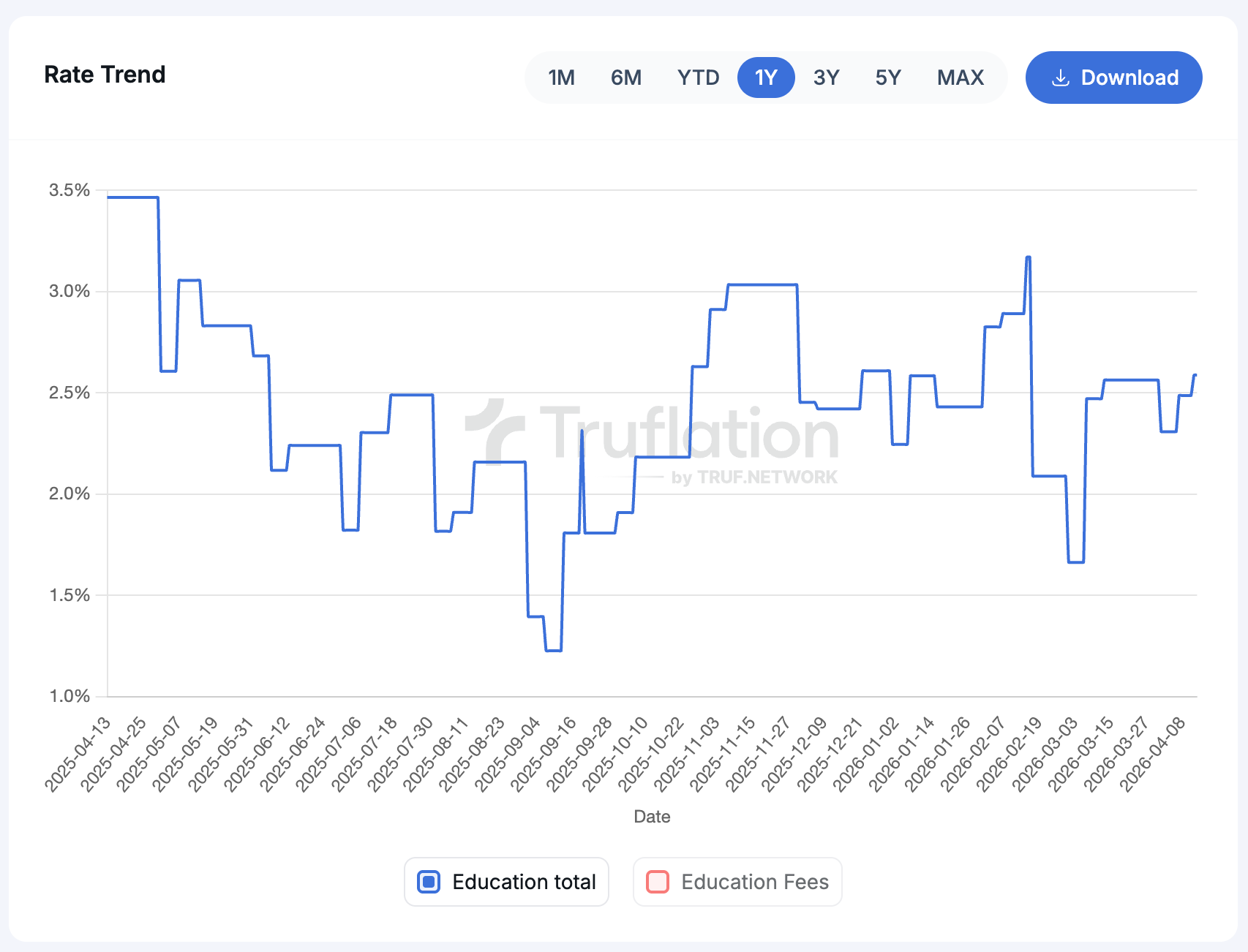
- Education
- and Communication
The main groups that have been showing disinflationary trends (lowering inflation) in the past weeks:
- Natural Gas
- Vehicle purchases
- Food
Subscribe to Truflation to get access to daily headline US inflation and its 28 underlying drivers.
Gasoline
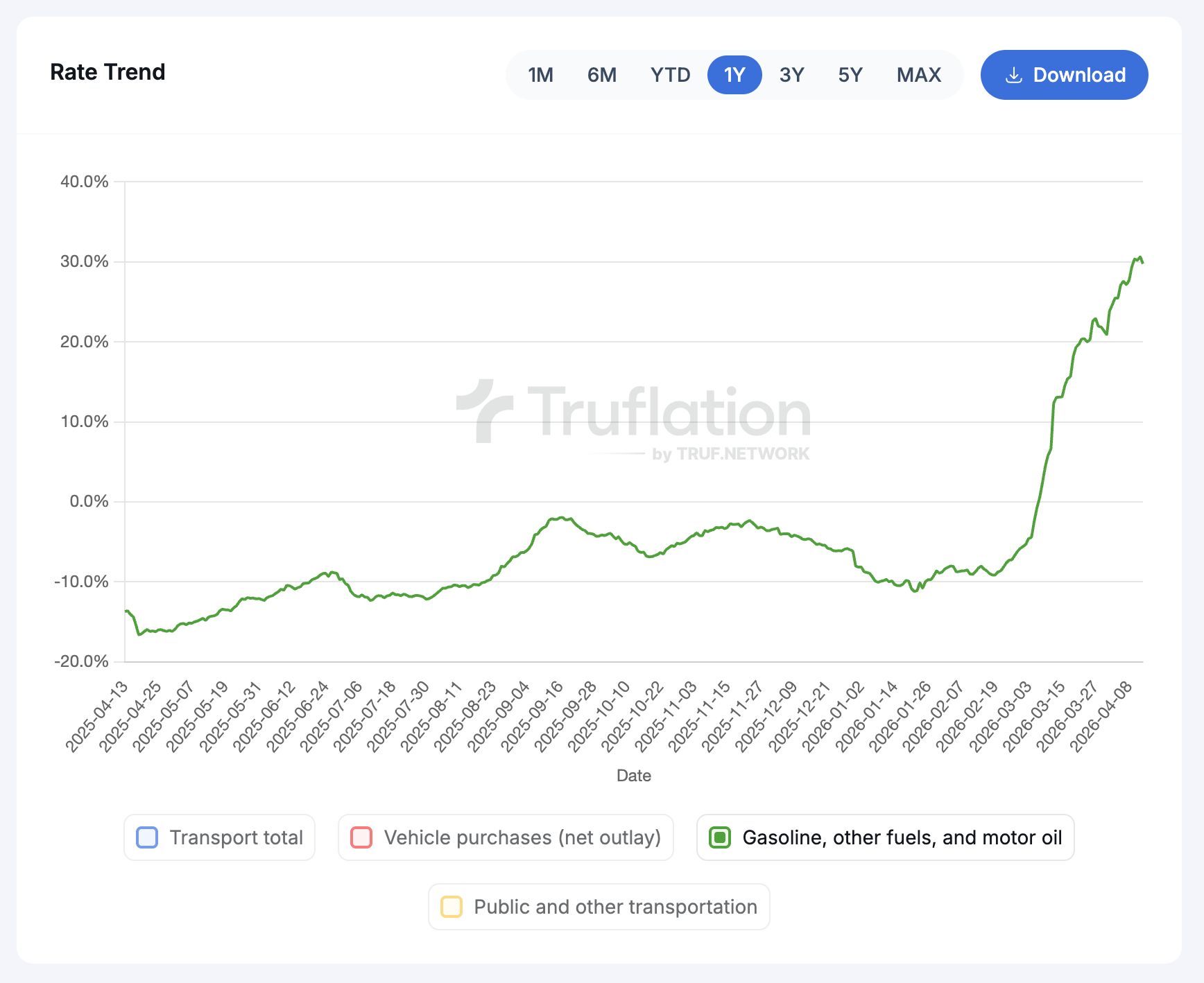
The largest increases were, of course, gasoline prices following the global oil supply shock. Gasoline inflation rose from deflationary -11.12% in January 2026 to 23.8% on the 1st of April and 29.8% as of the 13th of April, strongly driving official and Truflation CPIs.
Clothing & Footwear
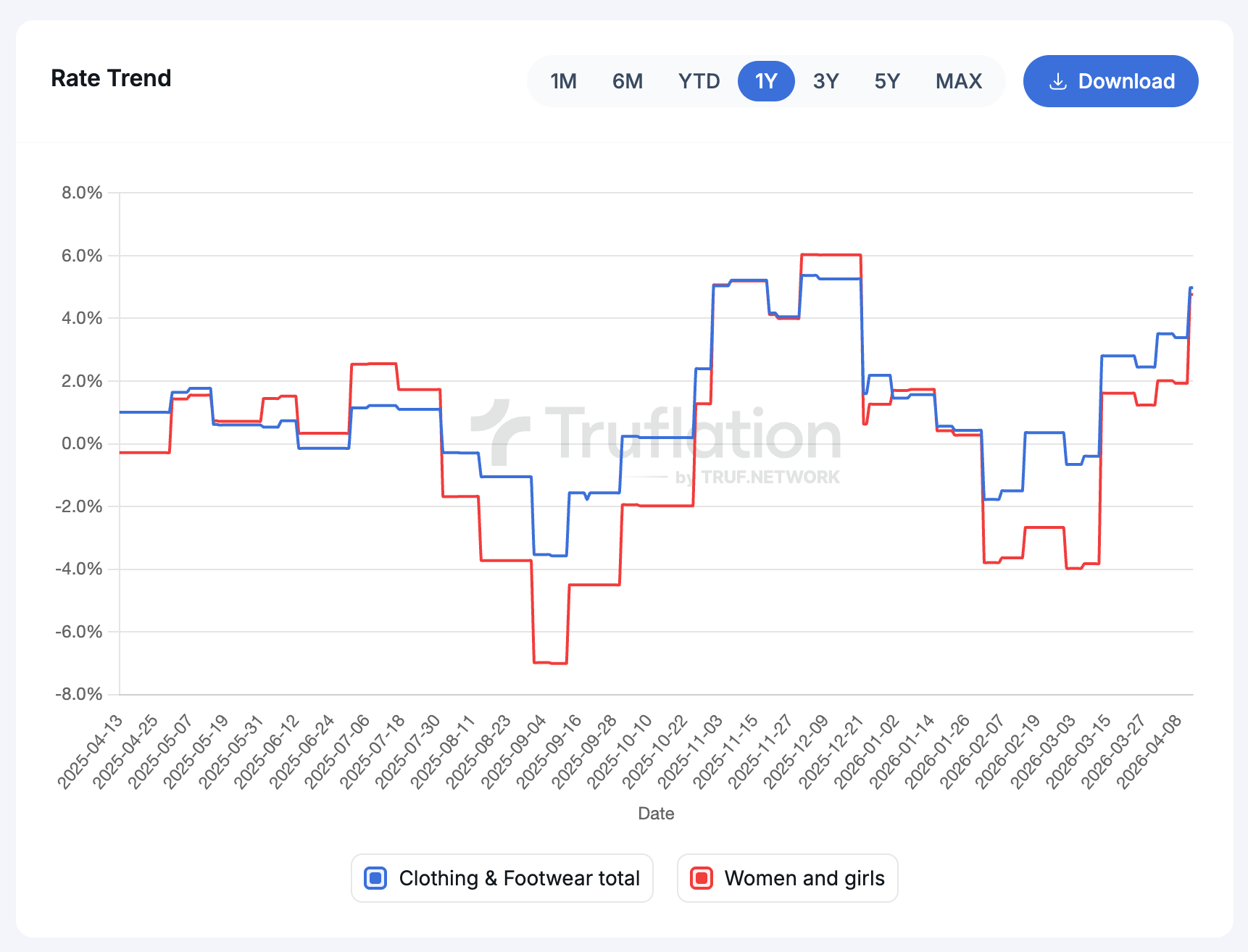
Clothing went from deflationary in February and March to +5% as of the 2nd week of April; Especially women's and girls' clothing registered the biggest jump, from -3.8% at the beginning of March to 4.8% as of April 13th.
Recreation
Recreational events also continued to increase, showing a clear uptrend from 1.9% end of March to 2.8% in April (as of 13th of April).
Household goods
The household goods didn't increase as much in April alone, but have been showing a slow uptrend over the whole year, going from a year-to-date low of 1.76% last April to 5.4% now (as of April 13th). There was a relief in Q1 of 2026 from ~6.5% to 4.2%, which has since mostly rebounded.
For more daily insights into all category and subcategory drivers, subscribe to one of the Truflation plans.
Education
Education cost inflation went from 1.7% to 2.6% in April alone.
Housing
Other lodgings, such as short-term rentals and hotels, moved from deflationary to near-neutral positive inflation, while the total housing remains slightly below zero, still driven there mainly by rental prices.
Rental prices remain strongly deflationary at -4.75% but increased by +1.11% in April alone.
Communications
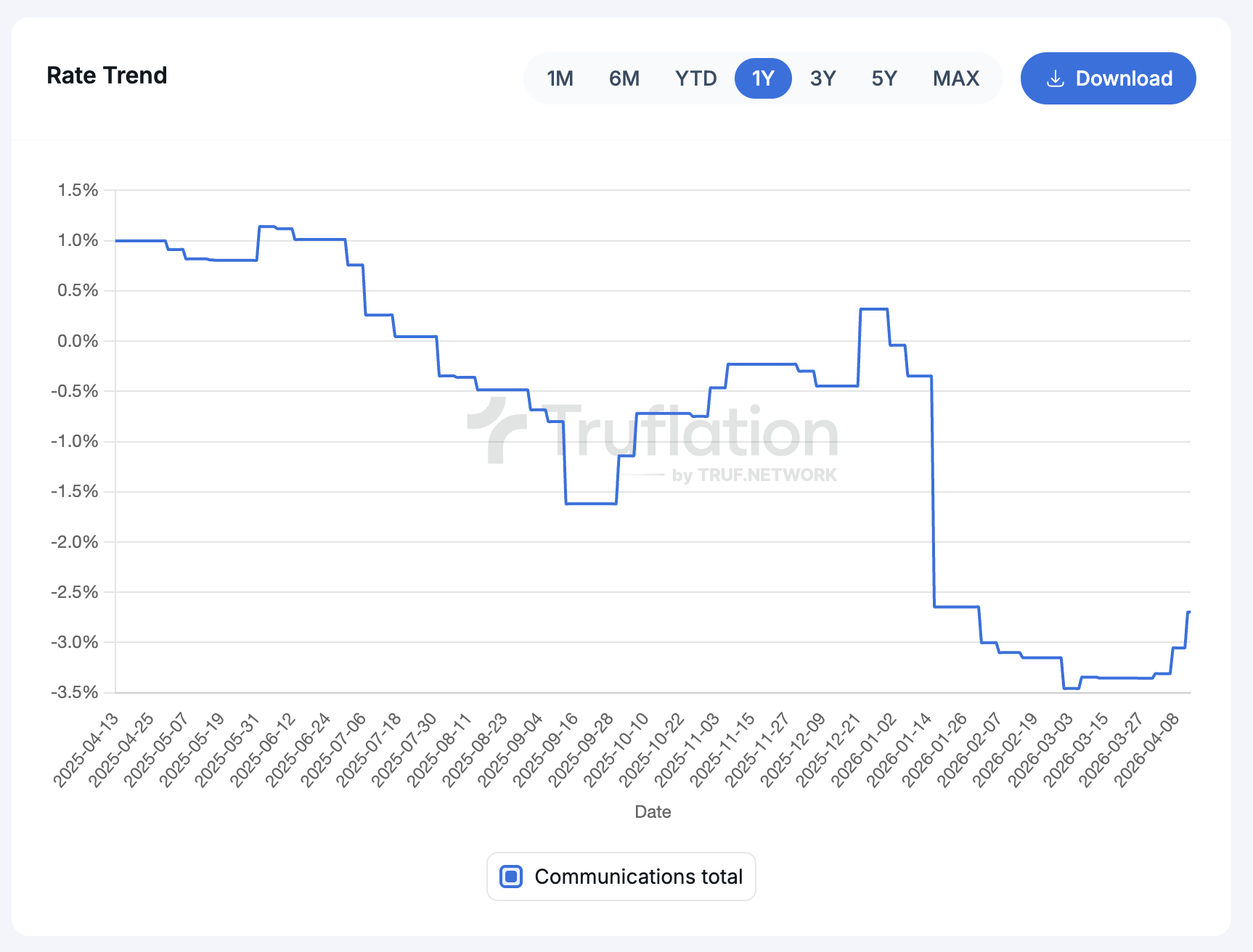
Communications (i.e., cellular plans), which have been strongly deflationary in Q1, have now edged up from -3.5% to 2.7%, but still remain in deflation (prices actually dropping instead of rising more slowly).
The categories where inflation shows decreasing trends
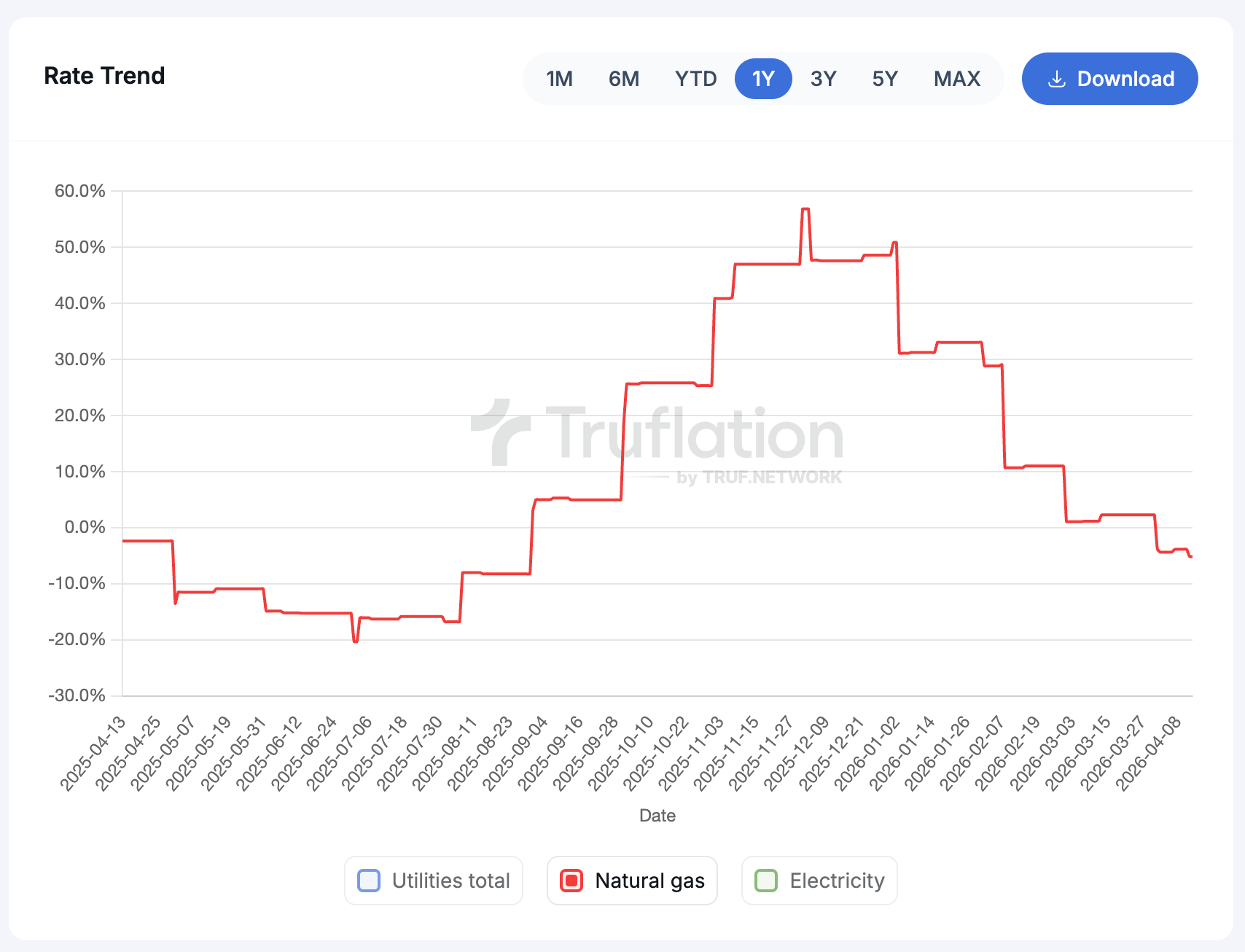
- Natural gas is -5.2%, down from a whooping +56.8% in December 2025, which should slowly translate into lower electricity costs and offset some of the effects that higher oil prices have on energy prices.
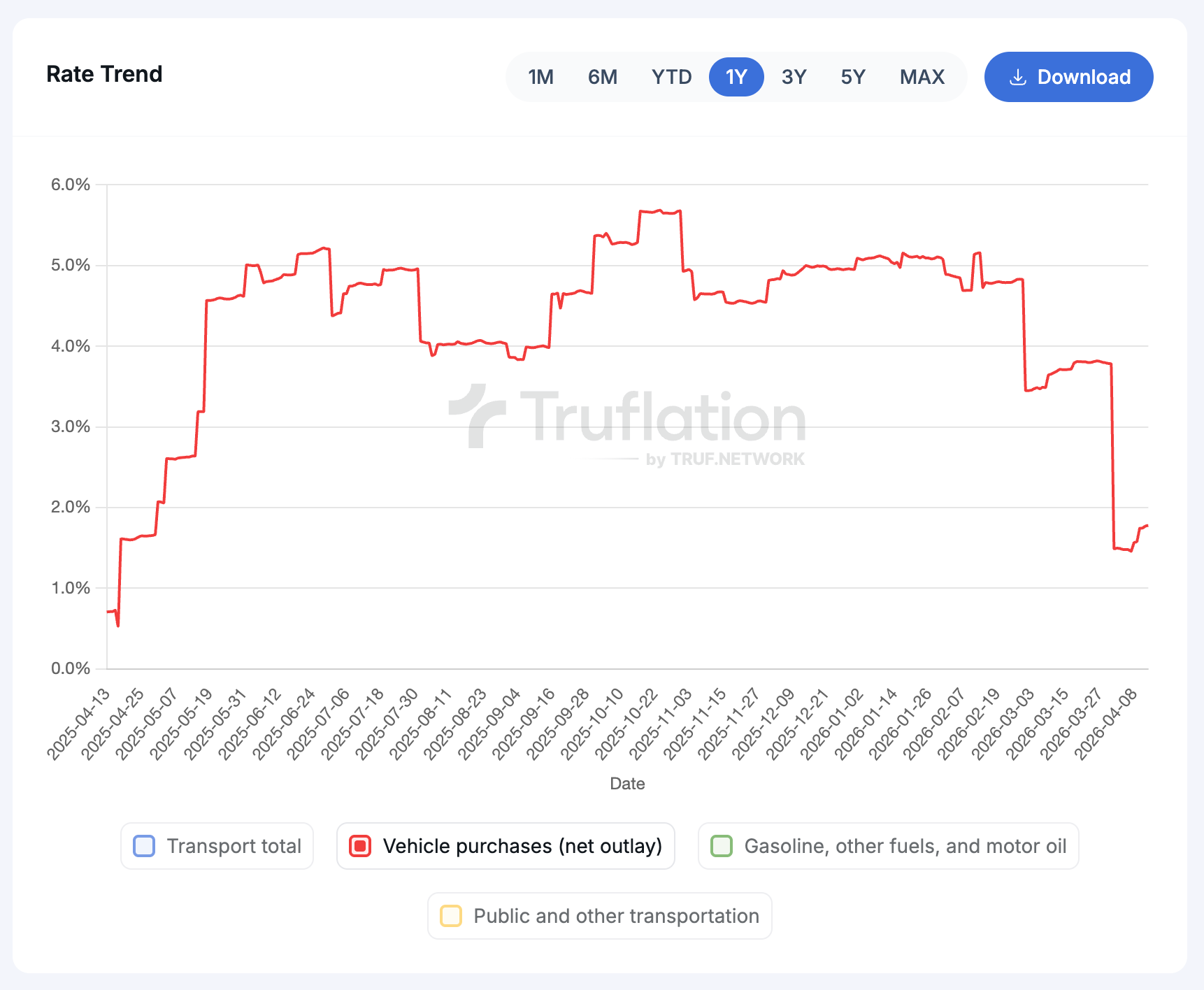
- Vehicle purchases dropped from their end-of-2025 highs of 5.6% to 1.8% now; the disinflationary trend is strongly visible despite a small rebounce in April alone from 1.5% to 1.8%.
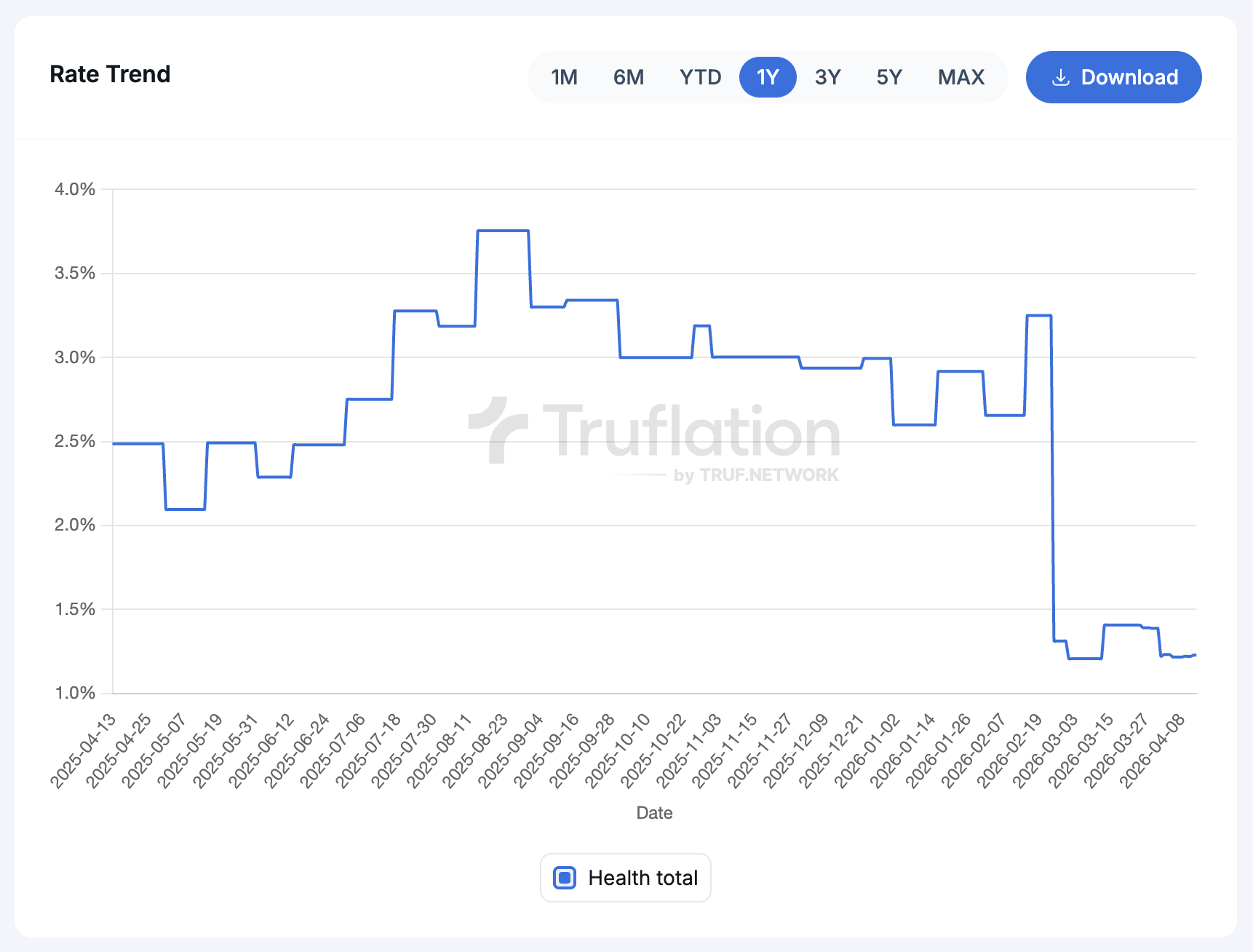
- Health is now 1.2%, down from 3.25% in February 2026, albeit mostly stable in April.
- Food, which had been increasing since mid-February from deflationary to positive inflation, has now reversed its trend back to near-neutral or mildly deflationary.
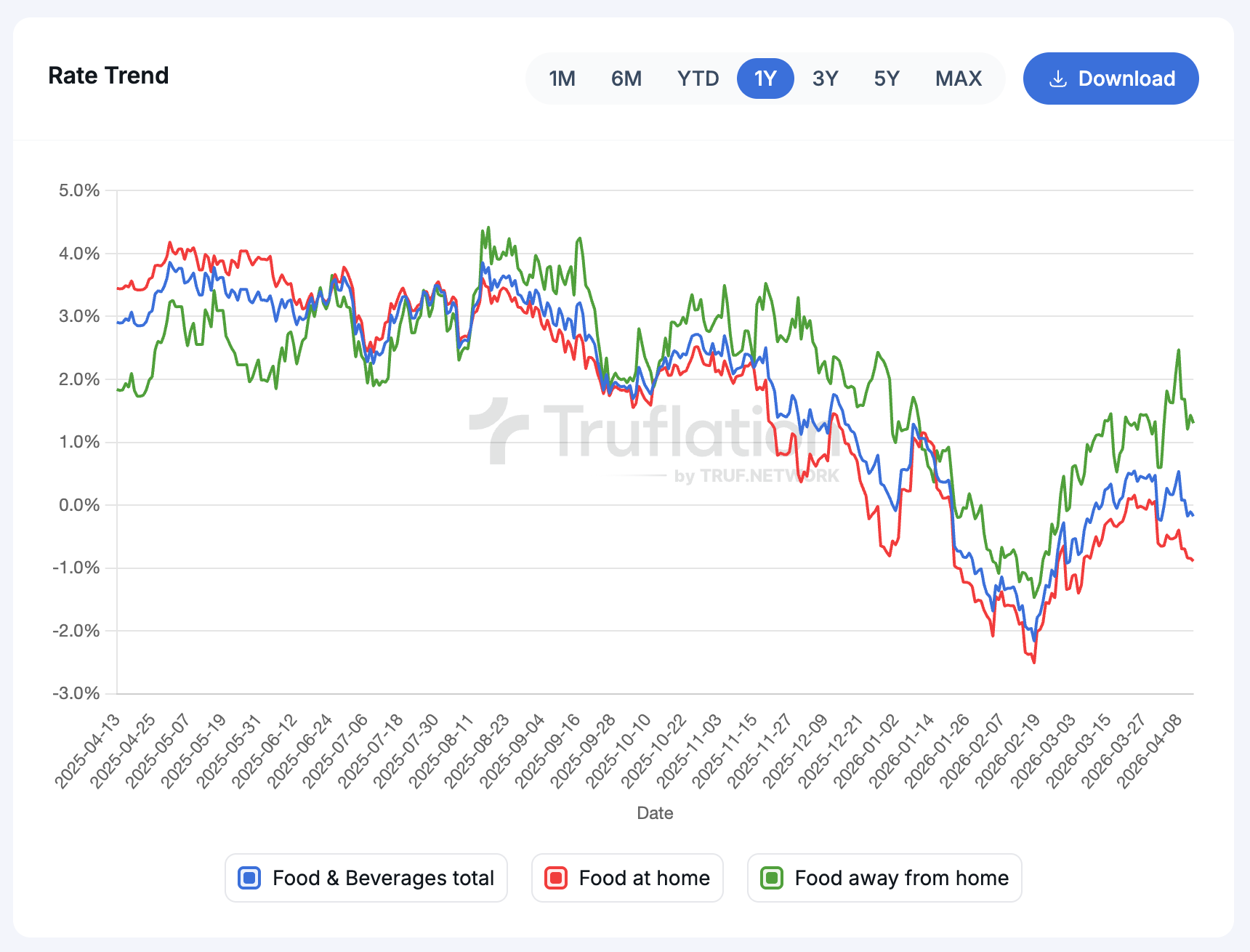
We think that food price changes might be temporary, and that oil shocks will translate into a fertilizer shock and higher food production costs.
Analyze the components and subcomponents of our US inflation to know what real macro trends are moving the markets in real time—a story that BLS CPI cannot capture.