
Truflation Data Shift Alert - March 12, 2026


We have registered 2 major upwards shift in inflation this week:
Today, March 12, Truflation US CPI jumped from 1.08% to 1.21%. This move has been driven solely by rising gasoline prices.
Average national gasoline prices at the pump rose by 5.7% YoY, from 6.64% to approximately 12.34%, which, at a weight of about 3% in our headline CPI, produced a shift of ~0.13% in our headline number.
Tomorrow, March 13, Truflation US CPI will jump from 1.21% to 1.47%, pushed upwards by multiple major categories
- Clothing
- Transport
- Household items
- and Housing
Clothing (+0.12%)
Clothing prices are rising due to a mix of new seasonal repricing and import-linked cost pressure. In the US, Retailers & Manufacturers are beginning to pass through cost changes in waves rather than smoothly, especially with the new seasonal inventory.
Transport (+0.05%)
Transport prices were mainly driven by gasoline prices, which in turn were driven by crude oil prices increasing since mid January, even before the conflict with Iran.
Following the onset of the Middle East crisis, oil prices have fluctuated dramatically, rising to over $110 per barrel from $57 per barrel as of January 1st, before dropping slightly. WTI Crude stood at $95 per barrel as of March 12th.
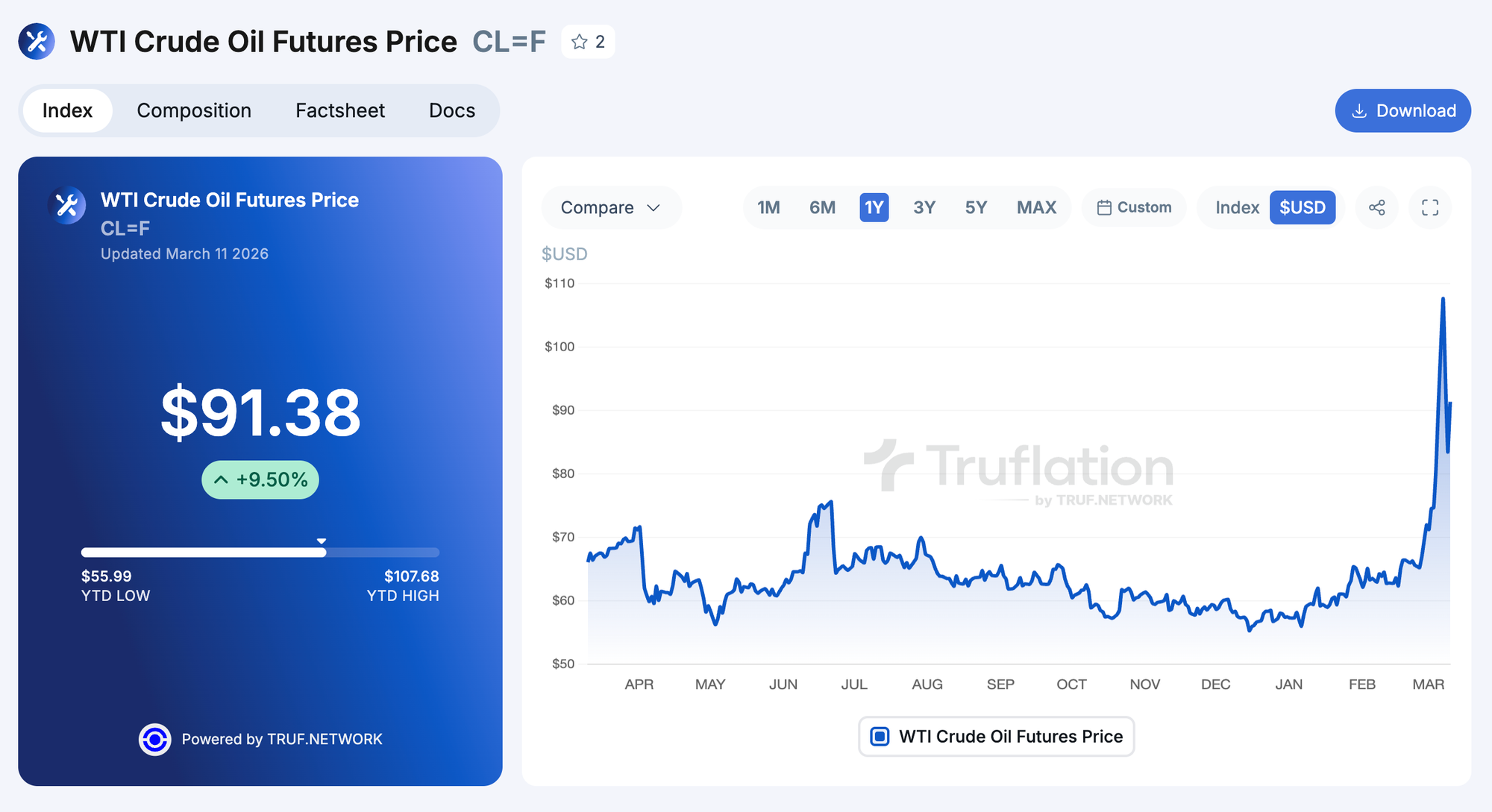
Oil uncertainty has been directly translating to the gasoline prices at the pump and having the fastest effect on real-time inflation data and the short-term cost of living.
The stickiness of this factor on longer-term inflation remains to be seen and will depend on how long the oil prices remain elevated. We discussed some of the effects on our recent spaces.
The oil prices and geopolitical factors affecting shipping routes will also likely affect other CPI components, increasing shipping and production costs for goods and food.
Household Durables & Items (+0.05%)
Household Durables were driven mainly by Household Services, which are being pushed by continued upward pressure on labor costs.
Housing (+0.03%)
Housing was driven by Other Lodging this time, which includes hotel prices and short-term lodging. It follows increased travel demand coupled with labour-intensive costs.
The US travel sector has remained strong, with hotel occupancy and revenue per available room (RevPAR) rising as both leisure and business travel continue to recover, giving operators pricing power.
Utilities (+0.02%)
Consumer utility costs were mainly driven by fuel oils and other fuels.
Utilities are rising for two related reasons: electricity remains structurally sticky upward, and winter-related fuel dynamics, i.e., price fluctuations from the harsh US winter, can still bleed into regulated household utility pricing with a lag.
EIA reported that retail electricity prices have increased faster than inflation since 2022, tied to increased demand from AI Data Centres. This trend is expected to continue and accelerate.
The EIA's Short-Term Energy Outlook projects the residential electricity price rising from 17.3 cents/kWh in 2025 to 18.0 cents/kWh in 2026.